

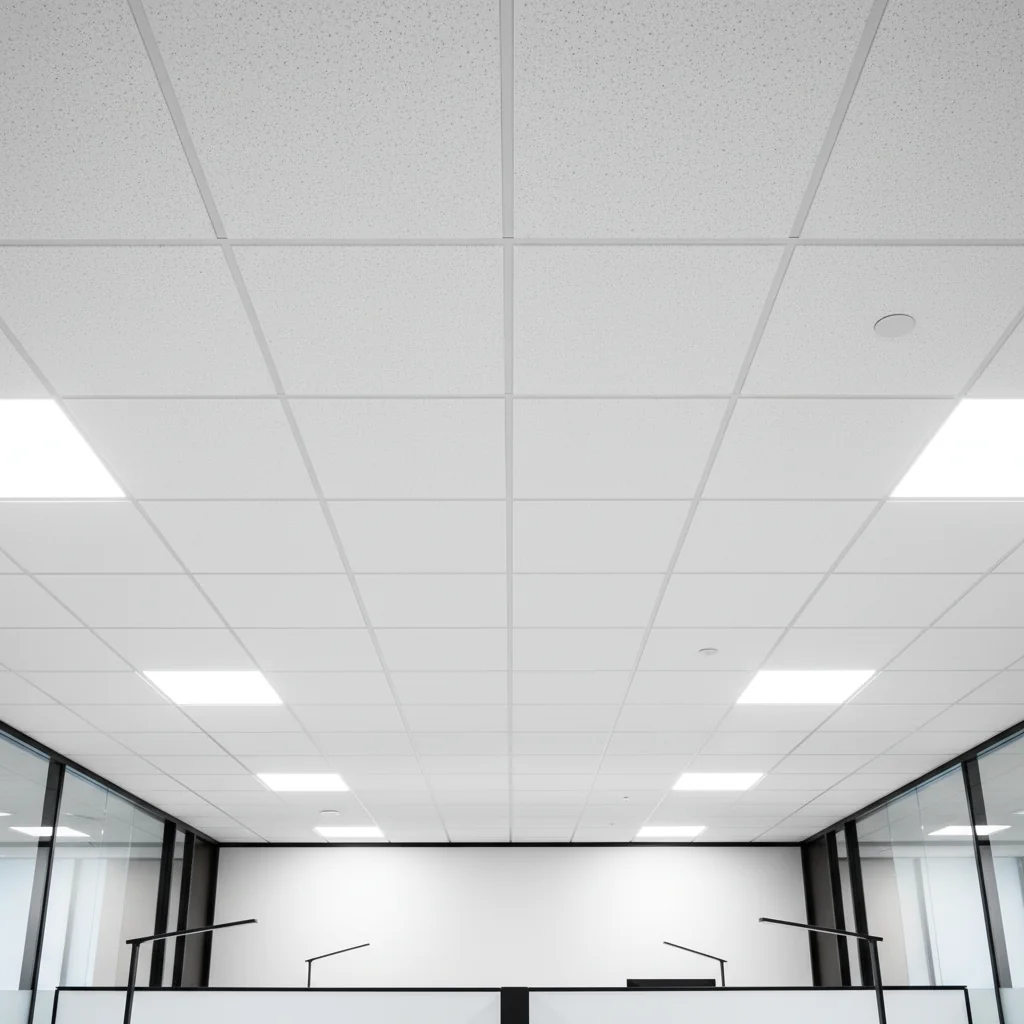
Should You Clean or Replace Your Ceiling Tiles? The Data-Driven Comparison
Most commercial facilities face this question when ceiling tiles look dingy, stained, or discolored. The answer depends on the condition of the tiles, not just how they look. We've cleaned thousands of commercial ceilings and replaced hundreds more, and the decision comes down to a simple distinction: surface problems can be cleaned, structural problems require replacement.
| Factor | Professional Cleaning | Full Replacement |
|---|---|---|
| Cost per sq ft | $0.75-$2.50 | $5-$15 |
| Time Required | 1-2 days | 3-7 days |
| Disruption Level | Minimal (after-hours possible) | Major (ceiling access blocks operations) |
| Environmental Impact | Zero waste | Landfill waste from old tiles |
| Appearance Results | 85-95% restoration | 100% new appearance |
Interactive Cost Calculator
Adjust the inputs below to estimate your potential savings
When Cleaning Makes Financial Sense
For most commercial facilities, cleaning delivers dramatic improvements at a fraction of replacement cost. A typical 10,000 square foot office with stained ceiling tiles faces around $80,000 in replacement costs when accounting for materials, labor, disposal fees, and business disruption.
Professional cleaning of the same space runs $12,500 to $15,000 and takes one day instead of a week. The math shifts when tiles are structurally compromised. No amount of cleaning fixes a sagging tile or repairs physical damage. In those cases, replacement becomes the necessary investment, not just the expensive option.
When Cleaning Works Best
Cleaning restores tiles when the problem sits on the surface:
- Surface staining from grease, dust, water marks, or nicotine deposits
- Budget constraints where replacement costs exceed available funds
- Occupied facilities where minimal downtime matters (cleaning happens after-hours)
- Environmental priorities when avoiding landfill waste aligns with sustainability goals
- Structurally sound tiles that simply look bad but function properly
When Replacement Makes Sense
We turn down cleaning jobs when the tiles cannot be saved. Attempting to clean a damaged tile wastes time and money while creating false expectations. Replacement becomes necessary when:
- Structural water damage or sagging indicates the tile has absorbed moisture and lost integrity
- Active mold growth (not just surface staining) has penetrated the tile material
- Physical damage like cracks, breaks, or missing pieces compromises function
- Asbestos-containing tiles in pre-1980 construction require specialized abatement, not cleaning
- Previous improper cleaning damage from oversaturation or harsh chemicals has destroyed the tile's acoustic or fire-rated properties
The Hidden Costs of Replacement
Direct tile and labor costs tell only part of the replacement story. Commercial ceiling tile replacement typically involves:
- Business disruption from ceiling grid access blocking normal operations
- Disposal fees for old tiles (often several hundred dollars for a large facility)
- Coordination complexity with contractors, scheduling, and potential inspections if fire-rated ceilings are involved
- Avoid costly asbestos abatement by maintaining existing tiles—replacement can trigger $10k-$50k+ abatement costs in older buildings
These factors rarely appear in initial quotes but affect the total cost and timeline. Cleaning avoids most of these complications entirely.
Making the Right Choice for Your Facility
The decision between cleaning and replacement starts with an honest assessment of tile condition. Water-stained tiles from a leak that happened two years ago and has been fixed? Almost certainly cleanable. Tiles actively dripping from an ongoing roof problem? Replacement becomes necessary after fixing the leak.
We’ve worked with major hospitality properties where different areas of the same facility required different solutions. Guest room corridor tiles with nicotine staining from before the smoking ban cleaned beautifully at $1.25 per square foot. Meanwhile, laundry room tiles with water damage from a burst pipe required replacement at $8 per square foot. The honest approach saved tens of thousands of dollars by not attempting to clean tiles that couldn’t be saved and not replacing tiles that only needed cleaning.
The only challenge we’ve encountered with cleaning is managing expectations around results. While professional cleaning restores 85-95% of original appearance, it doesn’t deliver the absolute perfection of brand new tiles. Some deep stains, particularly decades-old nicotine or severe grease saturation, may leave faint shadows even after thorough cleaning. For most facilities, this trade-off makes sense given the 75% cost savings.
When tiles are just dirty rather than damaged, cleaning extends their life by 5-10 years while delivering immediate appearance improvements. When tiles are structurally compromised, replacement provides the only reliable solution. The key is knowing the difference before making the investment.
Before & After Gallery: Proven Commercial Projects
We've cleaned thousands of commercial ceiling installations over the past decade. The results vary quite a bit depending on how old the stains are, what caused them, and whether the tiles were maintained at all during their life.
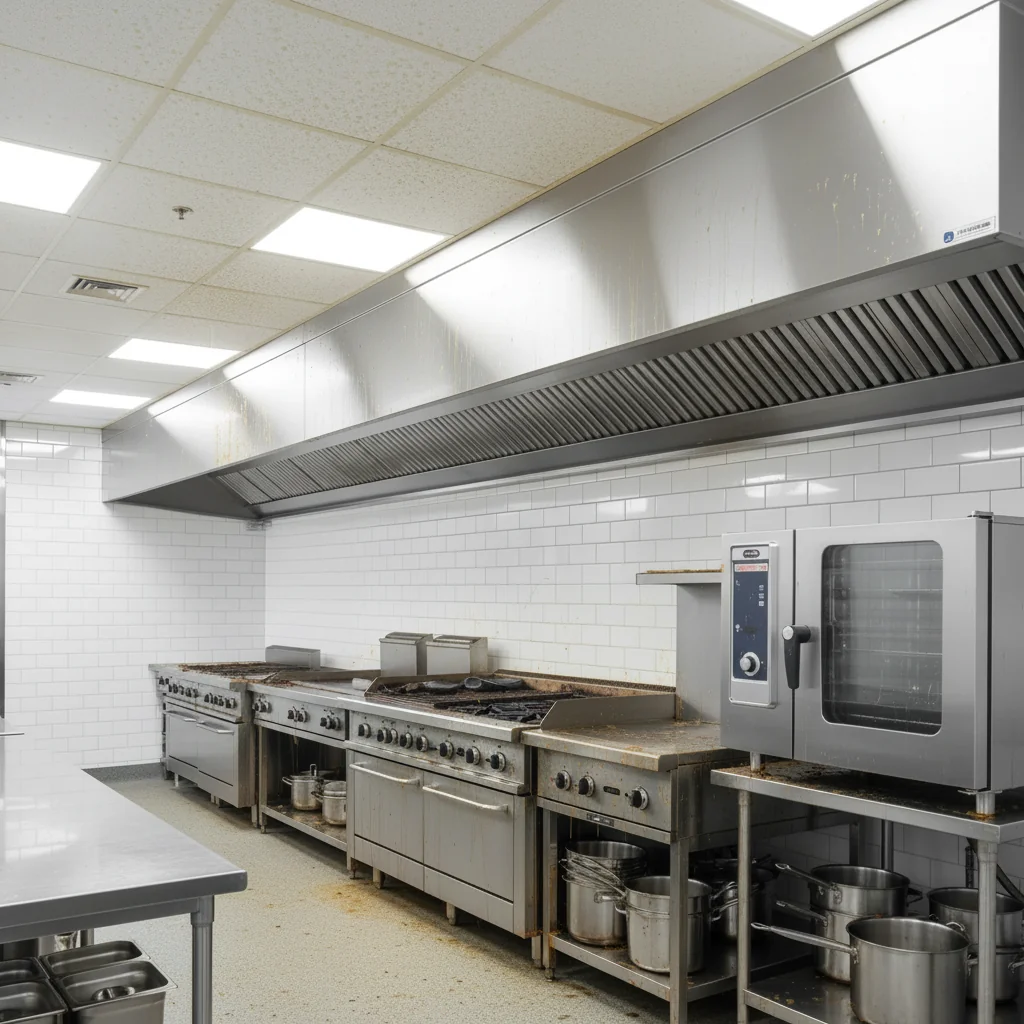
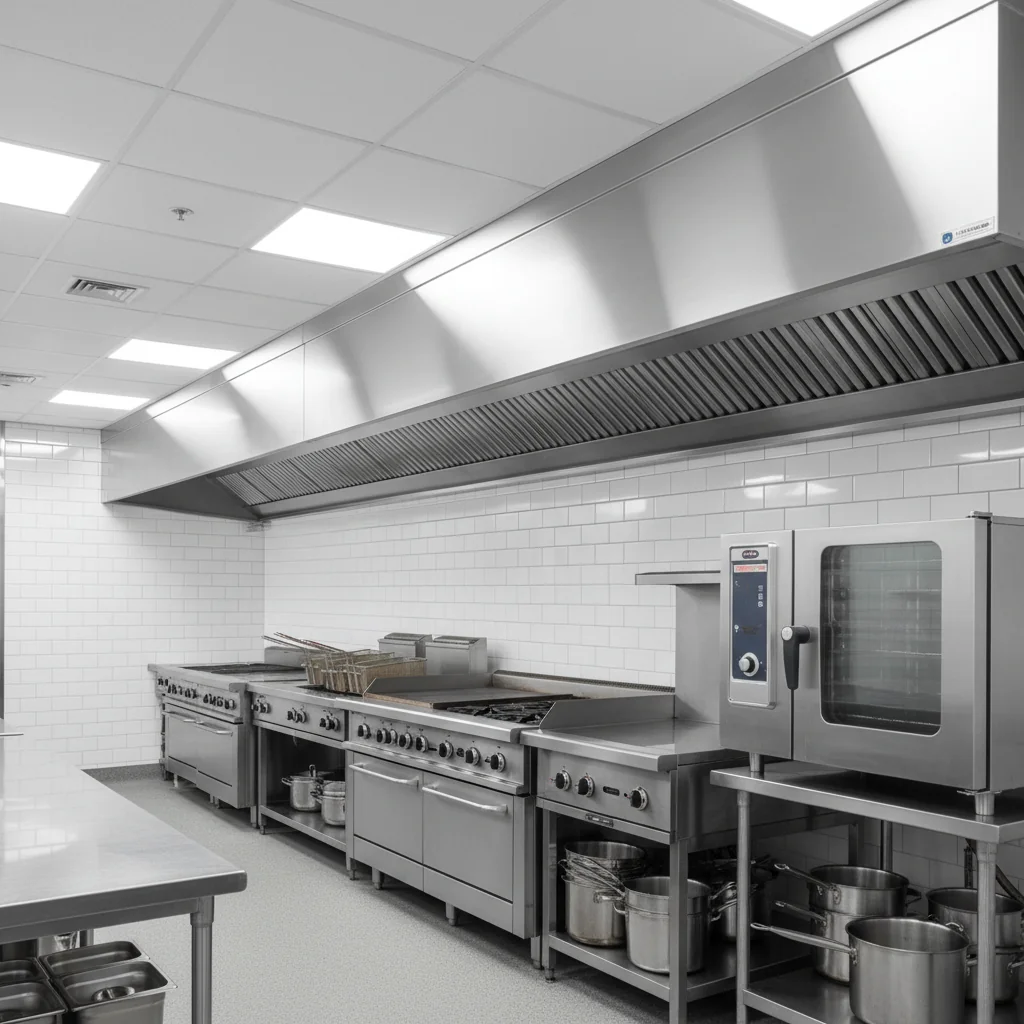
Commercial Kitchen - Grease Buildup
Professional degreasing of ceiling tiles, vent hood, and appliances - Restaurant kitchen in Scottsdale, AZ

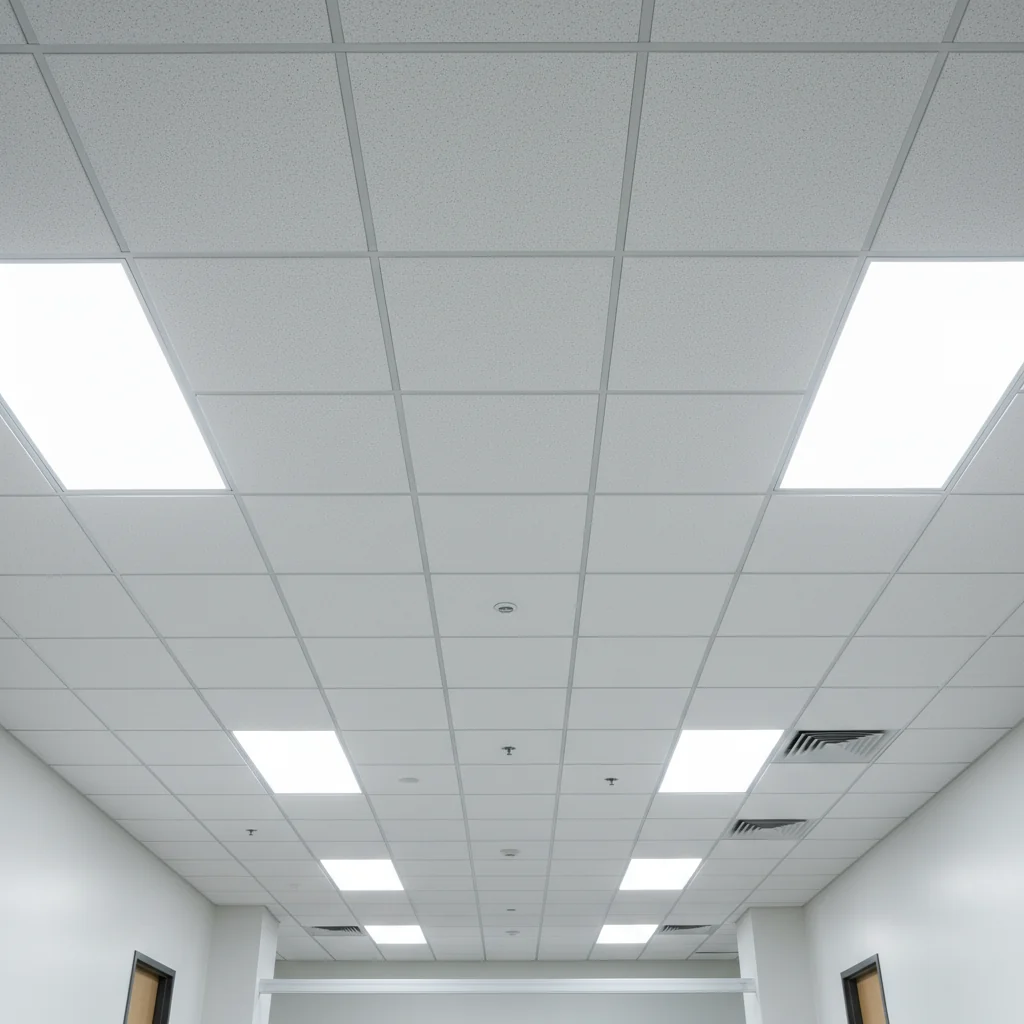
Office Building - Water Stain Removal
Non-structural water damage cleaned and restored - Phoenix office building, leak repaired prior to cleaning
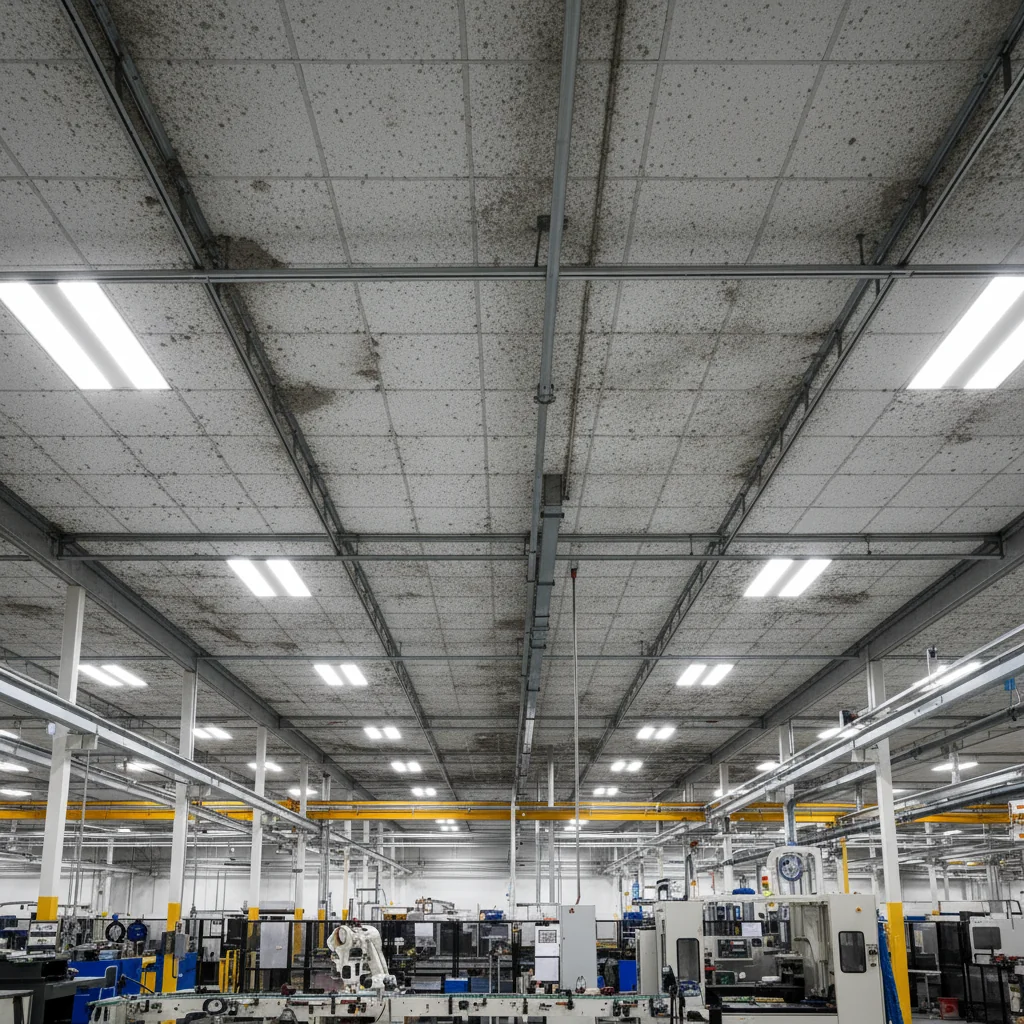
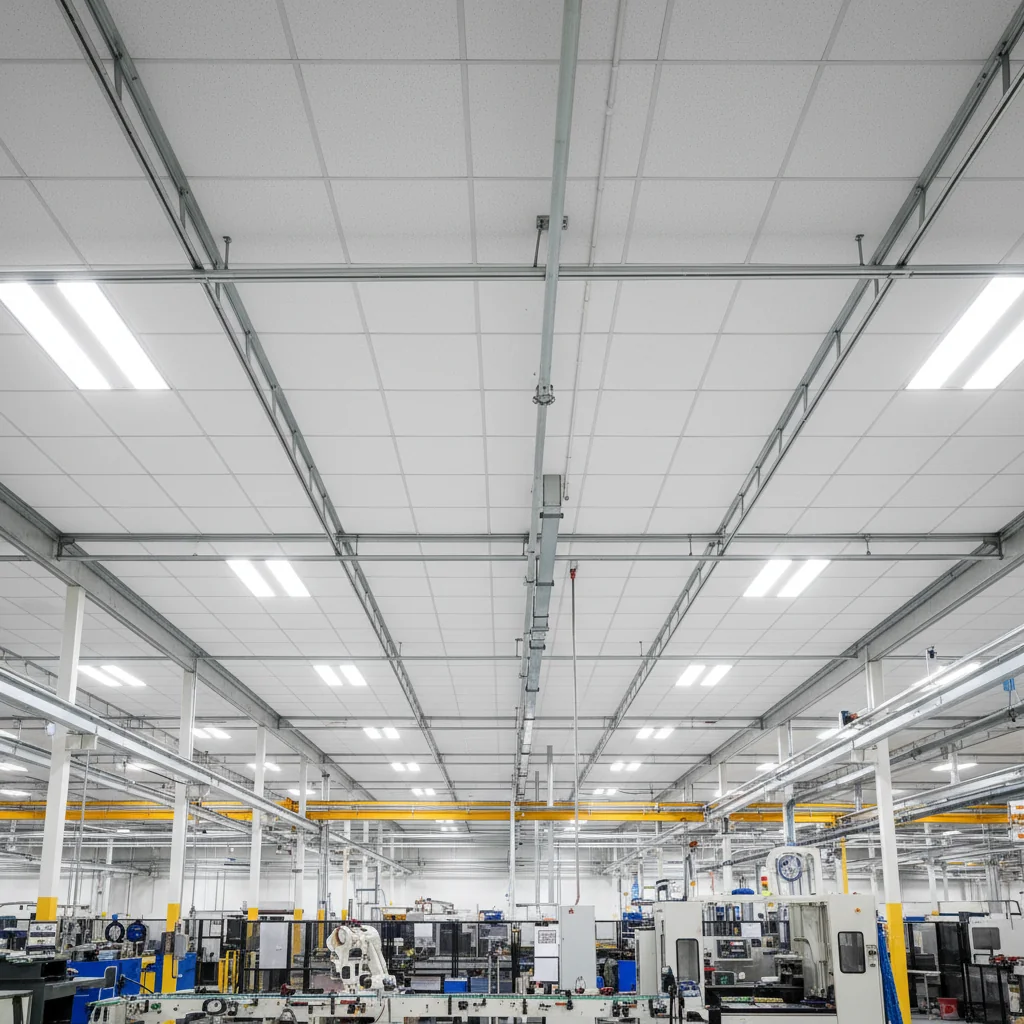
Manufacturing Facility - Combustible Dust Removal
NFPA-compliant dust removal with Class II HEPA equipment - Mesa manufacturing plant
Restaurant Ceiling - Discoloration Removal
Professional cleaning restored brightness and removed years of discoloration
What You Can Expect: Typical Results
Most stains can be removed or significantly lightened. Fresh water stains, recent grease accumulation, and surface dust respond very well to professional cleaning. We typically achieve 90-95% stain removal on issues caught within the first year or two.
Deep, old stains have limits. If water has been sitting on porous acoustic tiles for months, or if grease has been baking onto a kitchen ceiling for years, the contamination penetrates deep into the material. We can improve these situations (often by 60-80%), but perfection isn't guaranteed.
The Honest Assessment: When Cleaning Works (And When It Doesn't)
Not every ceiling tile can be successfully cleaned, and some stains simply won't come out. We've learned over the years which situations respond well to cleaning and which ones don't.
Tile Types We Successfully Clean
Acoustic/Mineral Fiber Tiles
We clean Armstrong products like Cortega, Ultima, and Fine Fissured regularly. USG tiles such as Radar and Glacier also respond well to our methods. Rockfon products work with our process too. The key with these tiles is moisture control—standard porous acoustic tiles will warp, sag, or develop water spots if they get too wet.
Vinyl-Coated Tiles
Armstrong Kitchen Zone tiles and other washable, scrubbable products are the easiest to clean. The vinyl coating allows us to use more aggressive cleaning methods when needed. These tiles are common in healthcare facilities and food service operations for good reason.
Metal Ceiling Tiles
Tegular panels and lay-in metal tiles can handle more aggressive cleaning than acoustic tiles. The solid surface resists moisture and typically responds well to degreasers and stronger cleaning solutions.
Stain and Soil Types We Remove
Most common in offices and retail spaces
Especially on vinyl-coated and metal tiles
Respond to hydrogen peroxide-based cleaners
Often lighten significantly on newer tiles
Clean with proper degreasing methods
Improvable but not always fully reversible
Industrial facilities, removed with HEPA systems
When Replacement Is Necessary
Our Commitment to Honest Solutions
We'll always tell clients if cleaning isn't the right solution. Our goal is to solve the problem, not just sell a service.
Some situations require replacement rather than cleaning. We've turned down cleaning jobs when we knew the tiles were beyond restoration.
If a tile has absorbed water to the point of warping, the integrity is compromised. Cleaning won't restore the shape or strength.
Surface staining from old moisture might clean off, but visible mold colonies growing in the tile material need to be removed entirely. The source of moisture must be addressed first.
Cracks, breaks, or missing pieces can't be cleaned back to wholeness. We'll identify damaged tiles during inspection and recommend replacement for those specific panels.
Older buildings (typically 1980s construction or earlier) require specialized abatement, not standard cleaning. Facilities with potential asbestos need proper testing and certified abatement contractors.
Oversaturation that caused warping, or harsh chemicals that stripped protective coatings, may leave tiles permanently compromised. This is why the cleaning method matters as much as the cleaning itself.
The typical pattern we see: About 10-15% of tiles in an aging facility need replacement rather than cleaning. The rest respond well to proper methods. A mixed approach—replace the worst tiles, clean the rest—often makes the most sense economically.
The Professional Ceiling Tile Cleaning Process: What to Expect
Most professional ceiling tile cleaning follows a consistent process developed over decades of working with different tile types and facility needs. The approach balances effectiveness with safety, protecting both the tiles and the facility below.
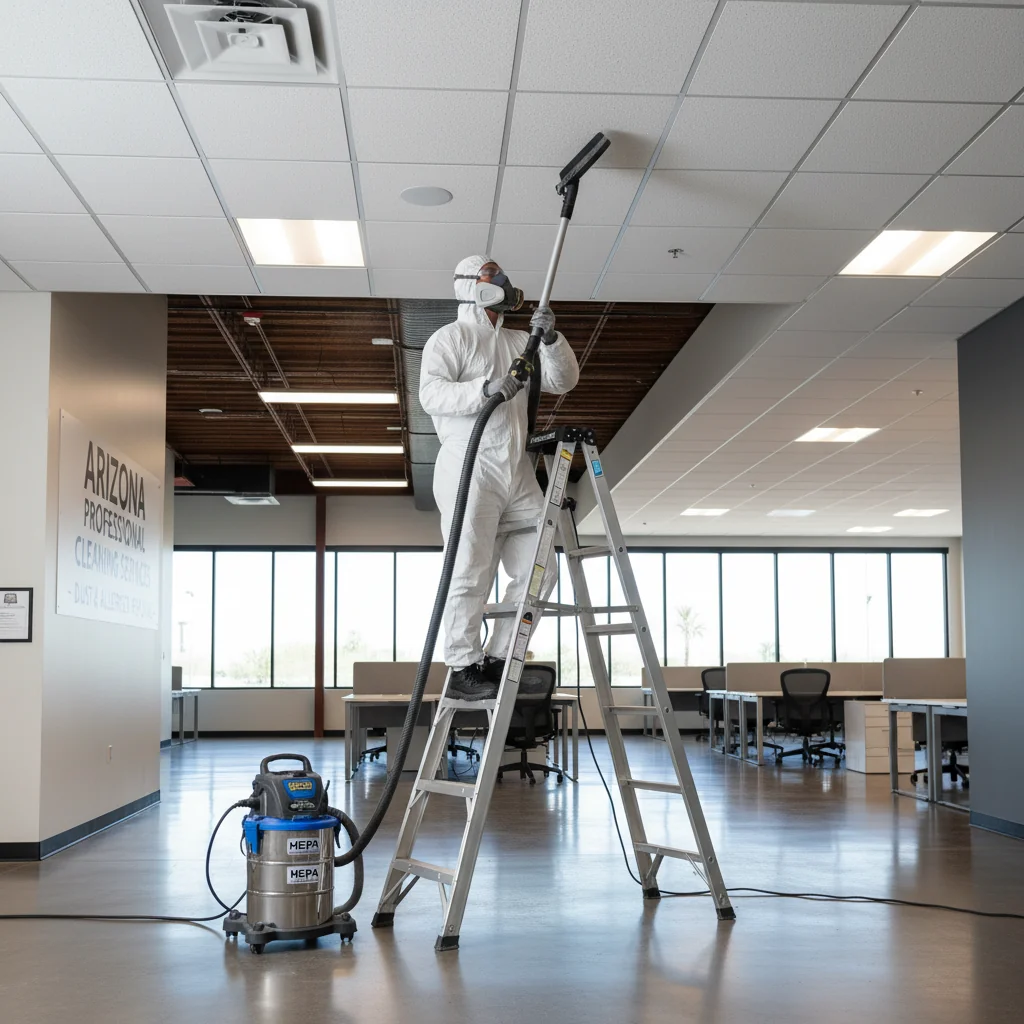
HEPA filtration removes dust without redistributing particles
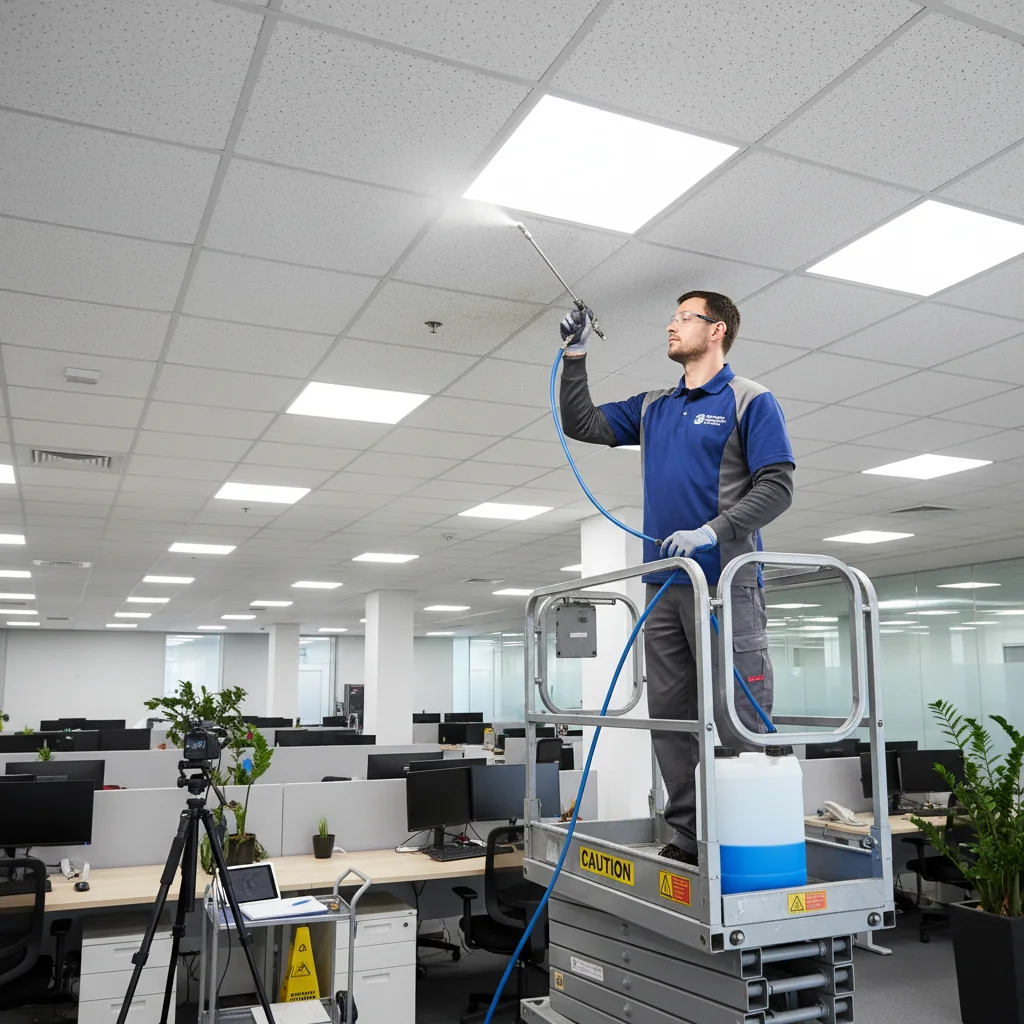
Professional cleaning solutions applied to protect tile integrity

Gentle blotting preserves acoustic texture
Our 21-Solution Professional System
We use a professional 21-solution cleaning system with non-toxic, biodegradable formulas specialized for different contamination types—grease, smoke, water stains, and dust. Each solution is designed to deliver spotless results without residue or lasting odors.
Step 1: Pre-Cleaning Assessment
The process starts with identifying what needs cleaning and what method will work best. Different tiles require different approaches.
A professional crew will examine the tile type first. Acoustic tiles (the most common) are porous and require minimal moisture. Vinyl-faced tiles can handle more aggressive cleaning. Metal tiles need specific solutions to avoid corrosion or streaking.
Step 2: Site Preparation
Before any cleaning starts, the area below needs protection. Furniture and equipment get covered with drop cloths or plastic sheeting. Sensitive items like computers, documents, or inventory get additional protection or relocation if the space allows.
Step 3: Dry Soil Removal
A HEPA-filtered vacuum with a soft brush attachment removes loose dust before any wet cleaning begins. This prevents turning dry dust into mud streaks when moisture hits the surface.
Step 4: Cleaning Application
Our specialized formulas are applied based on the specific contamination type—different solutions for grease, smoke, water stains, and dust. Each is designed to lift the stain without damaging the tile surface.
Acoustic tiles are porous. Oversaturation causes warping, destroys acoustic properties, and can void fire ratings. Professional cleaning uses minimal moisture—damp, not dripping—to preserve tile integrity.
Step 5: Stain Treatment
Some stains need targeted attention beyond general cleaning. Grease requires degreaser agents formulated for ceiling materials. Nicotine and smoke staining responds to hydrogen peroxide-based solutions. Water stains leave mineral deposits that need neutralizing solutions.
Step 6: Drying
Air movers get positioned strategically to promote circulation without blowing directly onto tiles. The goal is complete drying, not just surface drying—any trapped moisture can promote mildew growth or cause warping.
Step 7: Final Inspection
Each section gets checked for missed spots. Any areas that need additional attention get addressed immediately while equipment and materials are still on site.
Ceiling Tile Problems & Solutions
Every commercial ceiling faces specific challenges depending on what happens in the space below. Some problems look simple but resist ordinary cleaning. Others seem minor until you recognize they violate health codes or create fire hazards.
Grease Buildup in Commercial Kitchens
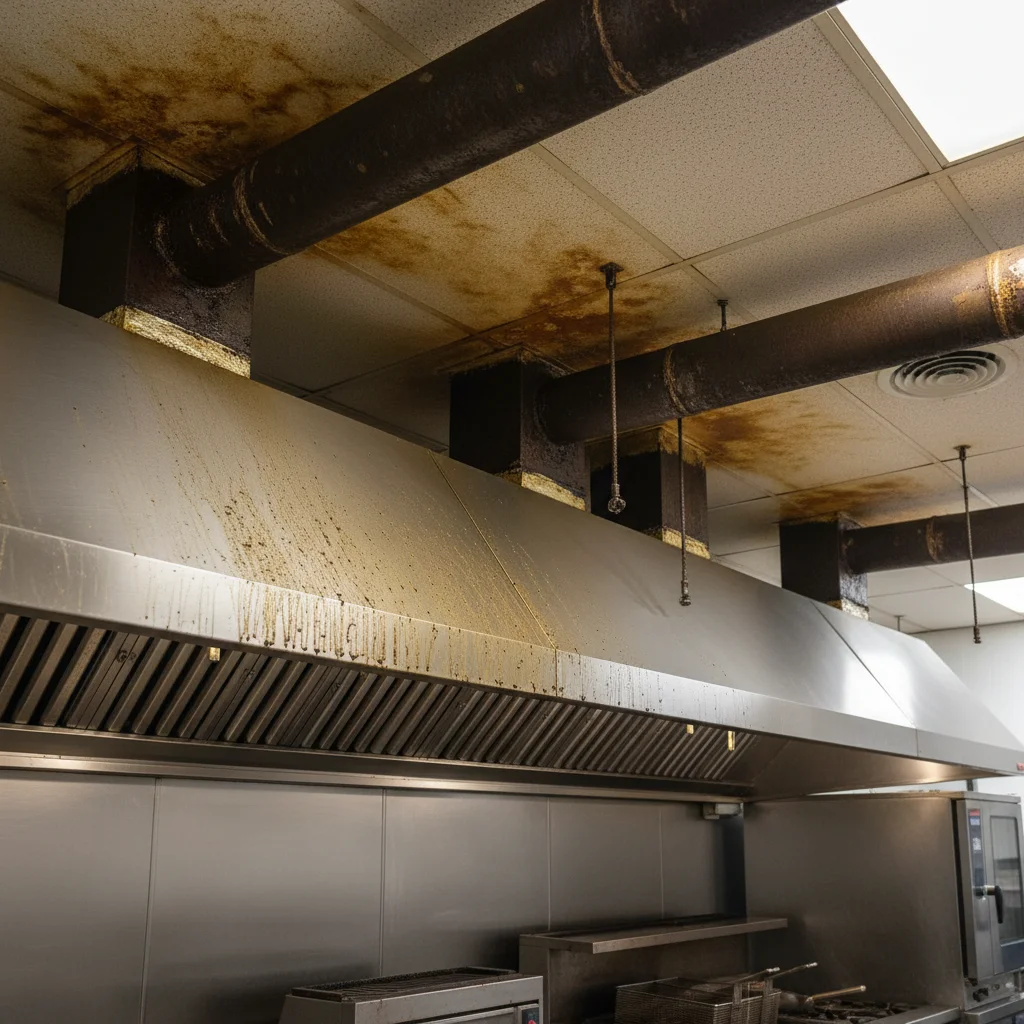
Heavy grease coating with drips - common in high-volume commercial kitchens
Tiny oil droplets rise with cooking steam and settle on every surface overhead. The film starts thin, then attracts more dirt and turns sticky. Eventually it becomes rancid, starts to smell, and can even drip back down into food prep areas.
Solution: Professional degreasing uses hot water combined with foam-based alkaline cleaners that break the molecular bonds in cooking oils.
▶Learn More: Regulatory Requirements & Fire Safety
Regular household cleaners don't cut through commercial kitchen grease. The oils have baked onto the tile surface under heat and humidity. The foam clings to the ceiling surface long enough to dissolve the grease, then gets rinsed completely away.
The FDA Food Code requires that ceilings in food service areas be kept clean and in good repair. A grease-coated ceiling counts as an unsanitary condition. Health inspectors cite restaurants for grimy overhead surfaces, and serious violations can lead to fines or temporary closure until the problem gets fixed.
Beyond the health code, grease overhead presents a genuine fire hazard. Grease is fuel. If a flare-up or electrical spark reaches a grease-laden ceiling, flames can spread rapidly across that surface. The National Fire Protection Association (NFPA) includes ceiling cleaning as part of kitchen fire prevention, not just cleanliness. We've seen kitchens where quarter-inch layers of grease accumulated on tiles near fryers. That's not just disgusting; it's dangerous.
Water Stains (Non-Structural)
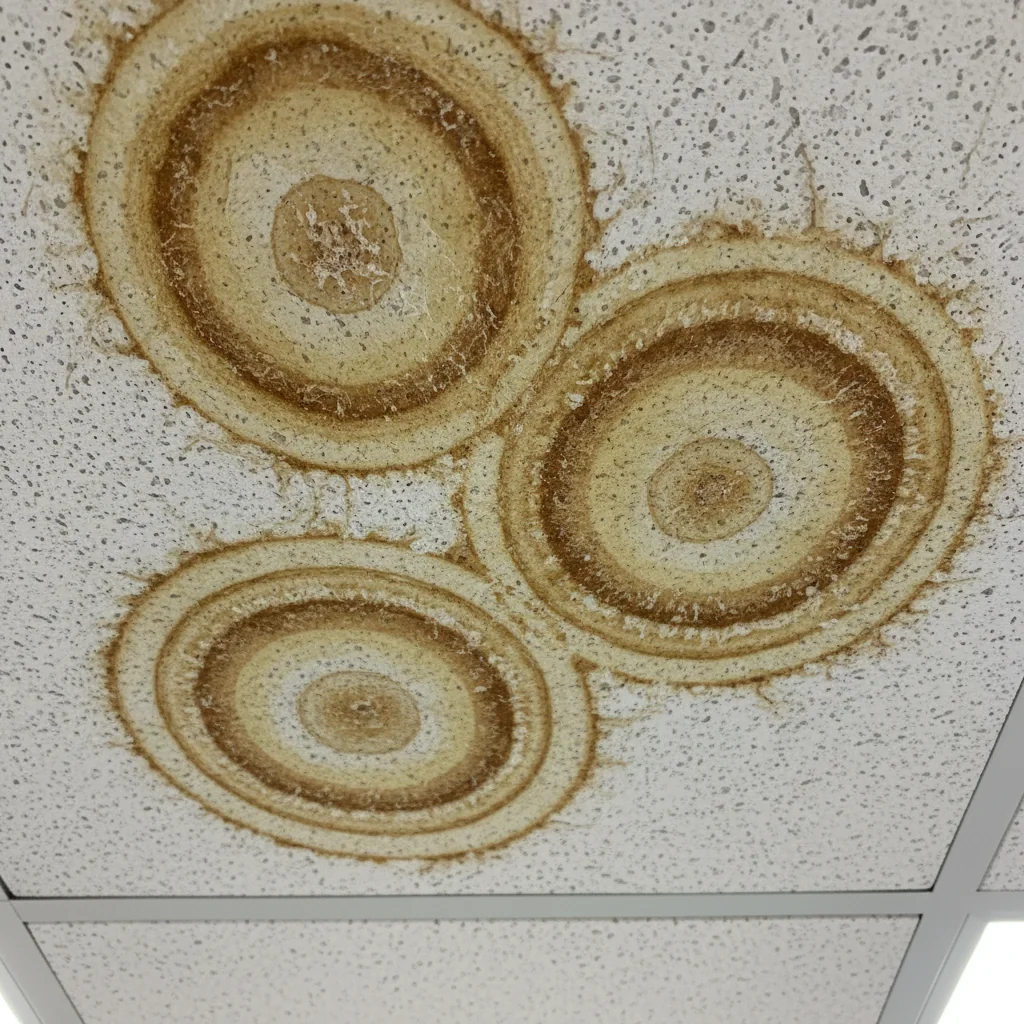
Brown and yellow water stain rings - typical pattern from repaired leak
When a roof leak or plumbing issue gets fixed quickly, it often leaves behind brown or yellow discoloration on otherwise intact tiles.
Solution: Surface water stains can often be removed using stain neutralizers and hydrogen peroxide-based cleaners with gentle blotting techniques.
▶Learn More: Assessment & Prevention
The tile itself remains structurally sound, just marked by minerals and tannins from the water that passed through. The process involves gentle blotting rather than scrubbing, since porous acoustic tiles damage easily under pressure. Multiple applications may be needed for stubborn staining.
However, if the tile has sagged, warped, or remains actively wet, cleaning won't help. Those tiles need replacement, and the moisture source must be addressed first.
The key distinction: if the leak happened, got repaired, and left surface marks, cleaning might restore the appearance. If water damaged the tile's structure or if moisture persists, replacement is the only solution. We always check for soft spots, sagging, or ongoing dampness before attempting stain removal. Trying to clean a structurally compromised tile wastes time and money.
Prevention matters more than treatment. Ceiling water stains usually point to roof issues, HVAC condensation, or plumbing leaks above the drop ceiling. Even after cleaning the visible stain, addressing the source prevents recurrence. A facility that cleans ceiling stains every six months without fixing the leak is just managing symptoms.
Nicotine and Smoke Staining
Cigarette smoke deposits tar and resin on every surface. Even in buildings where smoking has been banned for years, yellow-brown stains can persist.
Solution: Hydrogen peroxide-based cleaners oxidize the tar compounds, breaking them down chemically rather than just scrubbing them off.
▶Learn More: Odor Remediation & Deep Saturation
The staining looks like general dirt but has an oily component that resists water-based cleaning. Heavy staining may require multiple passes with increasing dwell time between applications. Patience matters more than force.
Beyond visible staining, smoke odor embeds itself in porous ceiling materials. Simply removing the brown color doesn't eliminate the smell. Professional smoke remediation often includes air scrubbers running during and after cleaning, plus odor-neutralizing agents that chemically bind to the smell compounds. The cleaning needs to be thorough, not just cosmetic.
Very old tiles that absorbed smoke for decades may reach a point where replacement makes more sense than restoration. When nicotine has saturated deep into acoustic fiber, the odor never fully leaves. We've encountered situations where even after aggressive cleaning, the smell returned whenever humidity levels rose. At that point, new tiles cost less than repeated cleaning attempts.
Dust and Allergen Accumulation
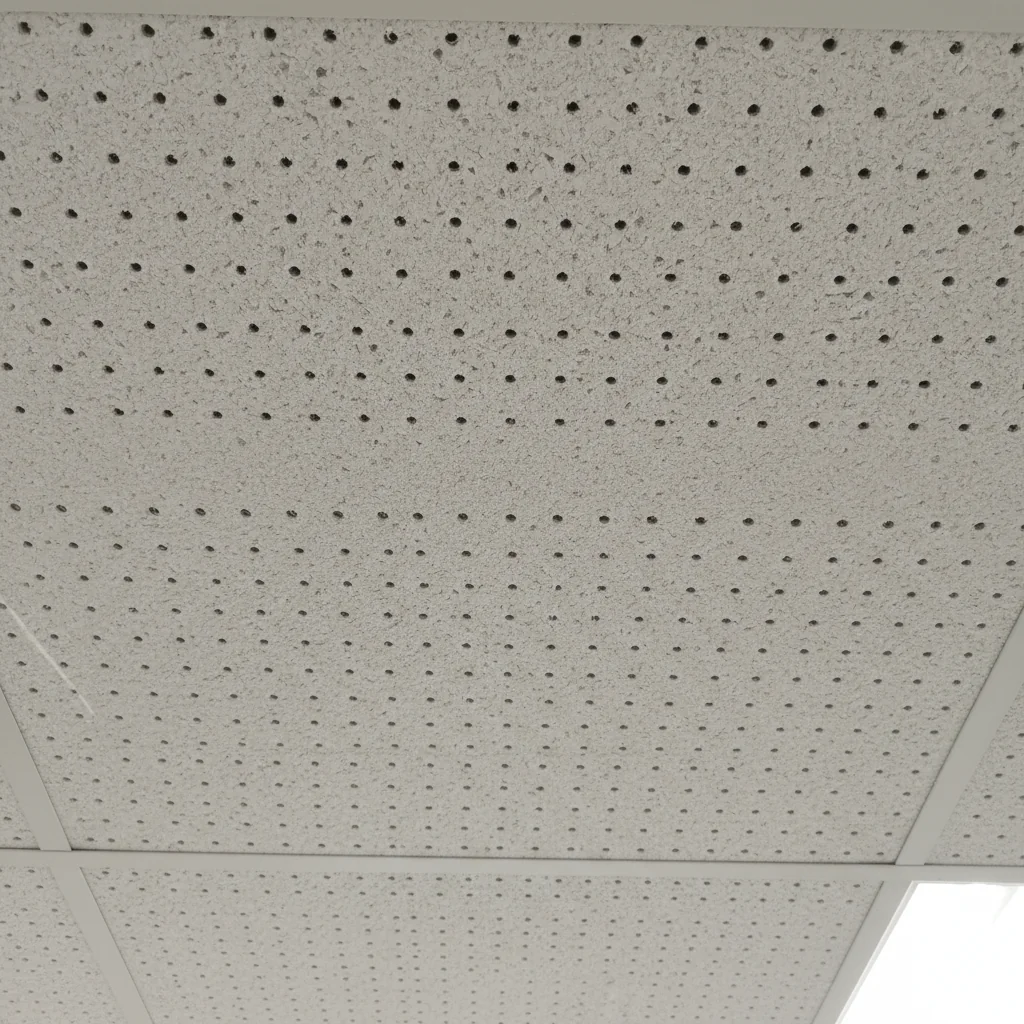
Gray dust layer on acoustic ceiling - typical in manufacturing facilities
Every building accumulates dust on ceiling tiles. The dust settles on horizontal surfaces, then gets disturbed by air movement and falls back into the breathing zone.
Solution: HEPA filtration vacuums trap particles down to 0.3 microns, preventing redistribution into the air during cleaning.
▶Learn More: Health Impact & Air Quality Data
Dust composition varies by building type. Office buildings collect paper dust and skin cells. Schools add chalk residue and playground dirt tracked inside.
The health impact isn't theoretical. The American Lung Association identifies poor school air quality as a contributor to millions of missed school days each year, with ceiling dust playing a role in allergen circulation. Students and staff with asthma or respiratory sensitivities react to particles that healthy adults might not even notice.
Standard vacuuming stirs up as much dust as it captures. HEPA filtration makes the difference. A vacuum with proper HEPA certification traps particles down to 0.3 microns, preventing redistribution into the air during cleaning. This matters especially in schools and healthcare facilities where vulnerable populations spend extended time. Commercial HEPA systems designed for overhead work combine filtration with soft brushes that lift dust without damaging acoustic tile surfaces.
Regular dust removal improves indoor air quality measurably. Facilities that implement quarterly ceiling cleaning often report fewer respiratory complaints from occupants. The effect compounds over time because less ceiling dust means less contamination of HVAC filters and ducts, creating a positive cycle of air quality improvement.
HVAC Soot and Carbon Tracking
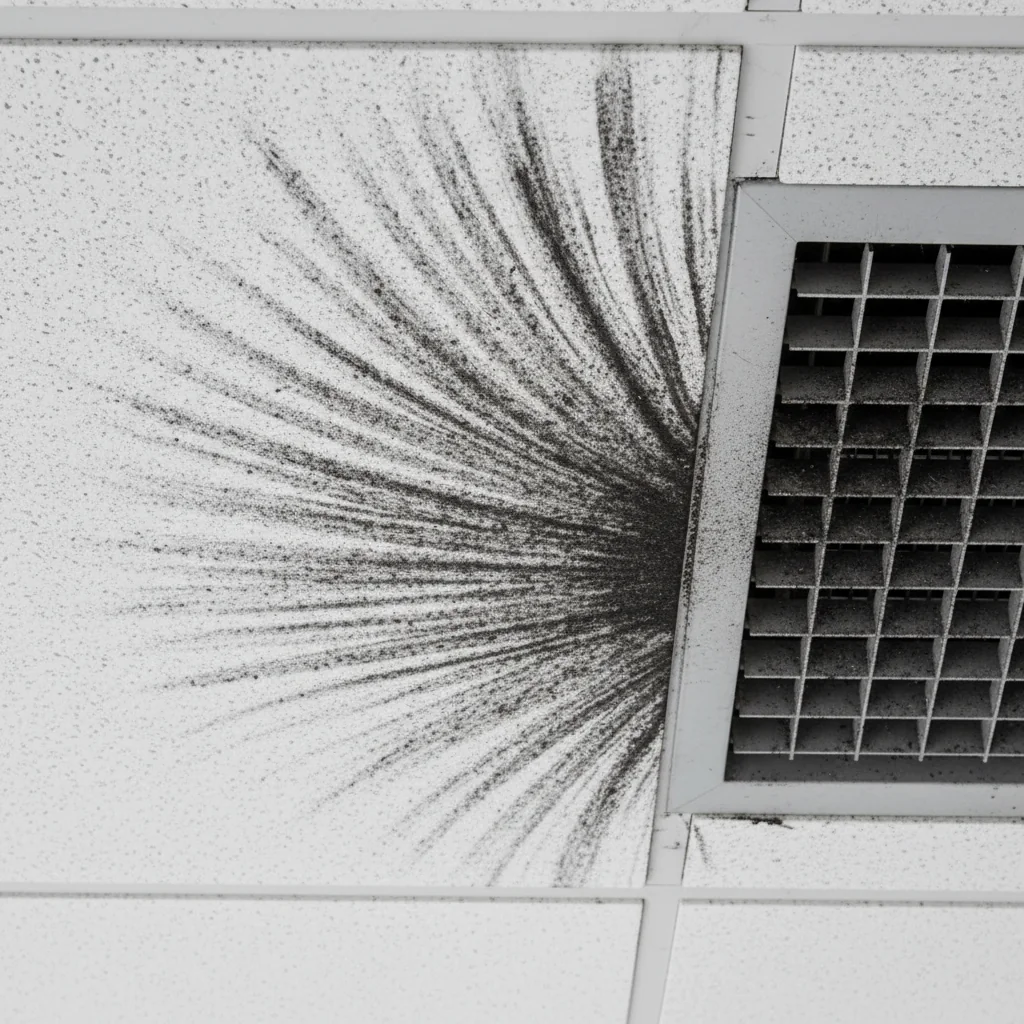
Black soot streaks from air diffuser - indicates combustion issue in HVAC system
Black streaks radiating from air diffusers signal incomplete combustion somewhere in the system. The soot contains oily carbon compounds that standard cleaning can't remove.
Solution: Specialized degreasing foam breaks down both the carbon and its oily binder, requiring multiple rinse cycles.
▶Learn More: Root Cause Diagnosis & Chemistry
Common causes include diesel forklifts operating indoors, older furnaces with dirty burners, or inadequate HVAC filtration allowing carbon particles through. The soot looks like dirt but contains oily carbon compounds that standard cleaning can't remove.
We've tested household cleaners on HVAC soot staining. They smear it around but don't lift it off. The carbon particles bond to ceiling tile surfaces through a combination of static charge and slight oiliness. Water alone just spreads the problem.
Professional removal requires specialized degreasing foam that breaks down both the carbon and its oily binder. The foam gets applied gently with soft applicators, then rinsed thoroughly with clean water. Multiple rinse cycles prevent residue that would attract new dirt. The process takes longer than simple dusting, but trying to rush it by scrubbing harder just damages the tile surface without removing the soot.
After cleaning, the underlying cause needs attention. If diesel equipment operates inside, improved ventilation or switching to electric alternatives prevents recurrence. If the furnace produces soot, it needs service. Carbon tracking that returns within weeks indicates an ongoing combustion or filtration problem, not just dirty ceilings.
Combustible Dust in Industrial Facilities
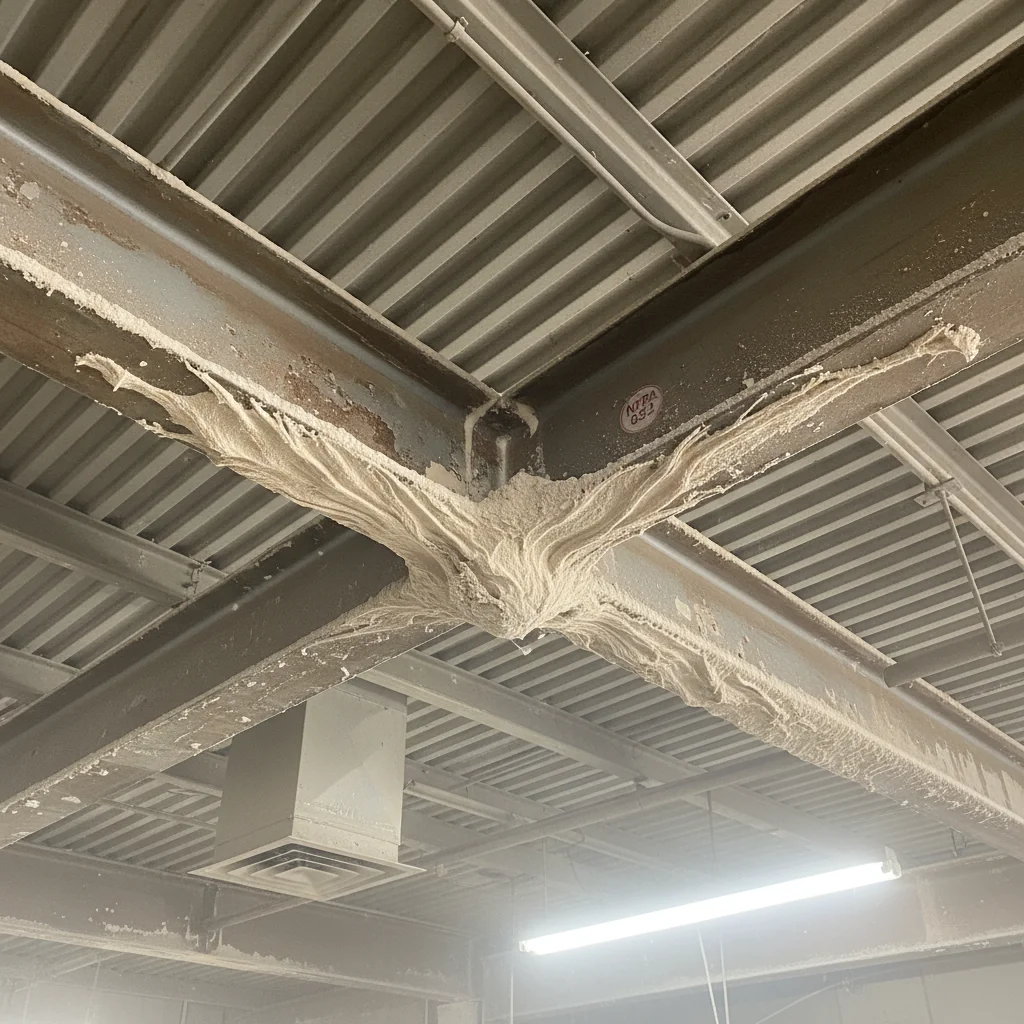
Combustible dust on industrial beams - explosion hazard per NFPA 654
Manufacturing operations generate dust from materials they process. When this dust accumulates on ceiling beams and overhead surfaces, it creates an explosion hazard.
Solution: HEPA vacuums rated Class II, specifically certified for dust that could ignite, with explosion-proof motors and proper grounding.
▶Learn More: NFPA 654, OSHA Requirements & Explosion Mechanics
Wood dust in cabinet shops, grain dust in agricultural facilities, textile lint in sewing operations, metal dust in machine shops—when this accumulates on ceiling beams, rafters, and overhead surfaces, it creates an explosion hazard that surprises facility managers unfamiliar with combustible dust risks.
The danger isn't obvious until you understand the mechanism. A layer of dust on a flat surface just sits there harmlessly. But if something disturbs that dust and disperses it into the air, then an ignition source (spark, flame, hot surface) can ignite the cloud. The resulting flash fire or explosion gets its fuel from dust that seemed inert when it was settled overhead.
NFPA 654 and related standards address combustible dust hazards across industries. While no single OSHA regulation covers all combustible dust, OSHA enforces dust control under the General Duty Clause and can cite facilities where accumulations exceed safe levels. The NFPA recommends semiannual cleaning of overhead surfaces in facilities that generate combustible dust, with more frequent cleaning in high-production environments.
Professional combustible dust cleaning uses HEPA vacuums rated Class II, specifically certified for dust that could ignite. These vacuums have explosion-proof motors and proper grounding to prevent static discharge. Using a standard shop vacuum risks igniting the dust you're trying to remove. Blowing dust down with compressed air creates exactly the airborne dispersion that causes explosions, making it both ineffective and dangerous.
The only acceptable approach involves carefully vacuuming or wet-wiping dust from overhead surfaces, collecting it in sealed containers, and disposing of it according to hazardous waste protocols if applicable. Personnel need respiratory protection because combustible dust isn't just explosive; many types cause serious respiratory disease with chronic exposure.
Insurance companies and OSHA inspectors both look for combustible dust accumulation during facility reviews. A citation or insurance requirement to clean overhead surfaces isn't optional. The facility either implements regular dust removal or faces fines, coverage issues, or worse consequences if an incident occurs. Facilities that schedule semiannual high dusting avoid these problems and substantially reduce their fire and explosion risk.
Why You Should Never Paint Ceiling Tiles (And What to Do Instead)
Critical Warning
Most acoustic ceiling tiles carry a fire rating (typically Class A or Class 1). Paint can seal the tile surface and alter its fire performance characteristics. Unless the paint itself is specifically rated and approved to maintain the tile's fire classification, applying it voids the original fire rating.
Acoustic Properties
Acoustic tiles work by absorbing sound waves through tiny pores in the material. Paint clogs these pores, essentially sealing the surface and eliminating the tile's sound absorption capability. What was once an acoustic ceiling becomes little more than a hard, reflective surface.
The Right Solution
Professional cleaning restores appearance without compromising function. Unlike paint, proper cleaning removes surface dirt, smoke residue, and many types of staining while leaving the tile's fire rating, acoustic properties, and warranty intact.
How to Choose a Commercial Ceiling Tile Cleaning Company (Buyer's Checklist)
When we talk to facility managers about hiring a cleaning company, the true challenge is not finding someone who will clean your ceiling tiles. The challenge is finding someone who will do it right—without causing damage, cutting corners, or leaving you with bigger problems than you started with.
What cleaning system do professional providers use?
Look for providers using professional cleaning systems with specialized formulas for different contamination types (grease, smoke, water stains, dust). The best systems use non-toxic, biodegradable solutions that are safe for occupied facilities. Also critical: proper application with minimal moisture—acoustic tiles absorb moisture if soaked, so damp wiping (not spraying or soaking) protects tile integrity. If a company plans to drench your tiles or use a pressure washer, that's a red flag.
Can they identify your specific tile type and adjust methods accordingly?
Not all ceiling tiles are the same. A professional should be able to look at your ceiling and tell you what type of tiles you have—and then explain how they will clean them without ruining their acoustic properties, fire rating, or protective coatings.
Will they tell you if cleaning is not the right solution?
Sometimes tiles are too damaged to clean. A trustworthy provider will be honest about when cleaning will not work. If they promise to fix everything no matter what, they are likely overselling.
Do they have references from similar industries?
Cleaning ceiling tiles in a hospital is different from cleaning them in a warehouse or restaurant kitchen. Ask for references from facilities like yours.
Are they insured for commercial work?
Ceiling cleaning involves working at heights, using lifts or ladders, and handling chemicals. Ask to see current certificates of insurance—general liability and workers' compensation.
Do they use HEPA filtration to protect air quality?
When cleaning overhead surfaces, you are disturbing dust that has been sitting there for months or years. HEPA-filtered vacuums capture these particles instead of releasing them back into the air.
Can they work around your business hours?
Most facilities cannot shut down during the day for cleaning. The right provider should be able to work nights, weekends, or during scheduled downtime.
Do they understand compliance requirements for your industry?
Different industries have different rules. Restaurants must meet health department standards. Industrial facilities must follow NFPA guidelines for combustible dust control. Healthcare facilities have infection control protocols.
What guarantees or warranties do they offer?
What happens if the cleaning does not work? What if tiles get damaged during the process? A reputable company should stand behind their work with some form of guarantee—whether it is re-cleaning at no charge or covering the cost of damaged tiles.
Do they provide a written scope of work and quote?
Verbal estimates and handshake agreements lead to misunderstandings. A detailed scope of work should explain what will be cleaned, what methods will be used, and what areas will be protected. Clear quotes prevent surprise charges.
Are their technicians trained in fall protection and lift operation?
Ceiling cleaning is not just about cleaning products—it is about safely working at heights. Technicians should be trained in ladder safety, scissor lift operation, and fall protection. OSHA has specific requirements for working at heights.
Can they handle specialty tiles (antimicrobial, vinyl-coated, fire-rated)?
Some ceiling tiles have special coatings that require specific cleaning methods. The wrong chemicals can strip antimicrobial finishes, damage vinyl coatings, or compromise fire ratings. Ask providers to confirm their process maintains these properties.
Questions to Ask Before Hiring Anyone (Including Us)
When meeting with potential providers, these questions help you assess their experience, honesty, and professionalism:
- "Have you cleaned ceilings in facilities like ours before? Can we contact those clients?"
- "What happens if tiles get damaged during cleaning?"
- "Will your cleaning process affect our fire rating or acoustic performance?"
- "How do you protect the space below the ceiling during the work?"
- "What is your process if you encounter mold or asbestos during the job?"
- "Can you show us your insurance certificates and safety training records?"
If a company gets defensive or evasive when you ask these questions, that tells you something. The right provider will welcome the scrutiny because they know their work stands up to it.
Industry-Specific Applications
The challenges of keeping ceiling tiles clean vary dramatically across commercial environments. A restaurant kitchen faces grease accumulation that would never occur in a medical clinic, while a warehouse deals with combustible dust that isn't a concern in retail spaces.
Restaurants and Commercial Kitchens
Grease particles rise with steam and cooking vapors, settling on every overhead surface. Health inspectors check ceilings during routine visits. Fire safety adds another layer of urgency—grease is fuel.
Recommended Frequency: Quarterly ceiling cleaning for most kitchens, monthly for high-volume operations
Solution: Washable, non-porous ceiling tiles (vinyl-coated) with foaming degreasers that break down oils. Work happens overnight to avoid disrupting service.
Healthcare and Medical Facilities
Ceiling maintenance ties directly to infection control. Even high-up ceiling tiles collect dust containing fungal spores or bacteria that can contaminate sterile areas.
Recommended Frequency: Semi-annual for general areas, more frequent for procedure rooms
Solution: ICRA protocols with HEPA filtration, antimicrobial-coated tiles, mild detergents that preserve protective coatings. Joint Commission compliance required.
Warehouses and Industrial Facilities
Combustible dust from manufacturing processes accumulates on high surfaces. If left unchecked, dust layers become fuel for explosions. OSHA enforcement through General Duty Clause.
Recommended Frequency: Semiannual minimum per NFPA 654, more frequent for high-dust operations
Solution: Class II HEPA vacuums with explosion-proof motors, proper grounding, fall protection for personnel working at height.
Schools and Universities
Indoor air quality directly affects student health and attendance. Children are more susceptible to allergens like dust and mold. Budget constraints make cost-effective maintenance critical.
Recommended Frequency: Annual or biannual deep cleaning, typically during summer/winter breaks
Solution: Extends tile life through periodic cleaning vs. expensive replacement. HEPA vacuuming removes allergens, improves lighting reflectance.
Retail and Office Spaces
Professional appearance matters. Dust accumulates from paper, fabrics, and HVAC circulation. Clean ceilings make spaces brighter and more pleasant.
Recommended Frequency: Semi-annual cleaning schedules for most offices
Solution: After-hours or weekend cleaning to avoid disrupting operations. Protection of electronics and workstations. Significant improvement in light reflectance.
Ceiling Tile Cleaning FAQs
Can you clean textured ceiling tiles?
▼
Textured tiles can be cleaned successfully when proper techniques are used. Professional cleaners use specialized cleaning systems with formulas designed for different tile types and contamination levels. The key is preserving the texture by avoiding scrubbing and using proper application techniques—gentle blotting with minimal moisture lifts dirt without flattening or altering the texture.
Will cleaning damage the tiles?
▼
Not if done correctly with professional cleaning systems and proper techniques. Professional cleaners use non-toxic, tile-specific formulas and application methods that preserve the surface, acoustic properties, and fire ratings. This includes proper moisture control—acoustic tiles are porous and oversaturation causes warping. DIY attempts or improper methods (like oversaturating tiles or using harsh chemicals) can cause warping, discoloration, or permanent damage.
Can you clean tiles with asbestos?
▼
Asbestos ceiling tiles (rare but found in some pre-1980 buildings) cannot be cleaned. They require specialized abatement by licensed professionals who will remove and properly dispose of them. If your building is very old and you're unsure about tile composition, testing is recommended before any cleaning or renovation work begins.
Can you match the color if some tiles need replacement?
▼
Professional cleaning companies carry common tile types and can usually match replacements closely. Perfect color matching can be challenging on very old tiles that have yellowed significantly over time. Combining spot replacement with a full cleaning of the surrounding area creates a more uniform appearance across the ceiling.
Is ceiling tile cleaning worth it?
▼
Cleaning offers about 75% cost savings compared to full tile replacement. It extends tile lifespan by 5 to 10 years, improves indoor air quality by removing dust and allergens, and dramatically improves facility appearance. For most commercial facilities, the return on investment is clear and immediate.
How long will the results last?
▼
Clean ceiling tiles typically stay fresh for 6 months to 2 years, depending on the environment. High-soil environments like commercial kitchens or industrial facilities may need cleaning every 3 to 6 months. Low-soil settings such as offices or conference rooms can go 1 to 2 years between cleanings.
How often should commercial ceiling tiles be cleaned?
▼
A general guideline is every 6 months (semiannually) for most commercial spaces. High-soil environments like kitchens, industrial facilities, or heavy-traffic areas benefit from quarterly cleaning or more frequent attention. Low-soil environments such as executive offices or conference rooms can often go a full year between cleanings.
How long does ceiling tile cleaning take?
▼
A typical office space of around 5,000 square feet usually takes 4 to 8 hours to complete. Larger warehouses or industrial facilities can require 1 to 3 days, depending on the scope. The timeline varies based on ceiling height, how severe the stains are, and whether special access equipment like scissor lifts is needed.
Do you work around business hours?
▼
Most commercial ceiling cleaning is scheduled after hours, on weekends, or during facility shutdowns to minimize disruption. This approach allows the work to be completed without interfering with daily operations, and gives cleaners unobstructed access to the space.
Do you need to remove tiles to clean them?
▼
Most ceiling tile cleaning is done in place without removing the tiles from the grid. Severe cases involving above-ceiling contamination (like mold growth in the plenum or water damage) may require temporary tile removal for thorough cleaning.
Will there be a chemical smell?
▼
Professional ceiling cleaning uses mild, non-toxic cleaners that produce minimal odor. Any scent typically dissipates within 1 to 2 hours with normal ventilation. Most commercial cleaning is scheduled after hours or on weekends, allowing plenty of time for air circulation before employees or customers return.
Will cleaning affect soundproofing or acoustics?
▼
Proper cleaning preserves acoustic properties because it doesn't seal or clog the porous surface of acoustic tiles. Painting ceiling tiles destroys their sound-absorbing function by filling the tiny pores that trap sound waves. Professional cleaning maintains both the appearance and the functional performance of acoustic tiles.
Cost & ROI: What You Save by Cleaning vs. Replacing
The numbers tell a clear story: cleaning ceiling tiles costs a fraction of what replacement does. For most commercial facilities, the difference is substantial enough to make cleaning the obvious choice when tiles are still structurally sound.
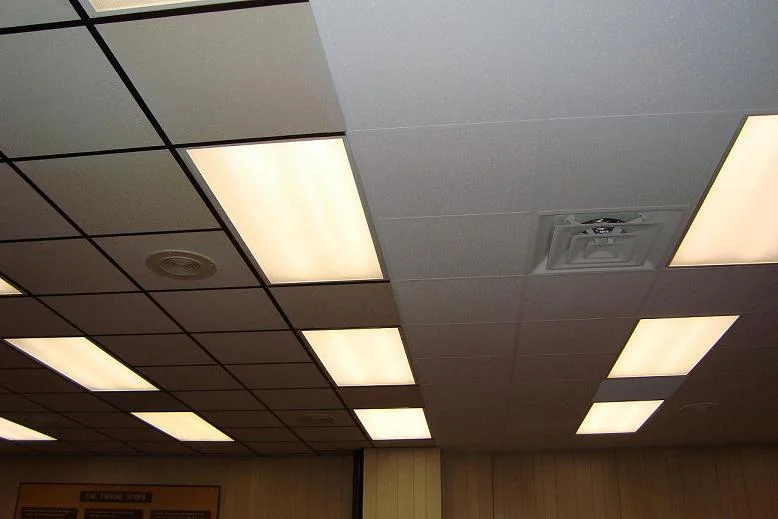
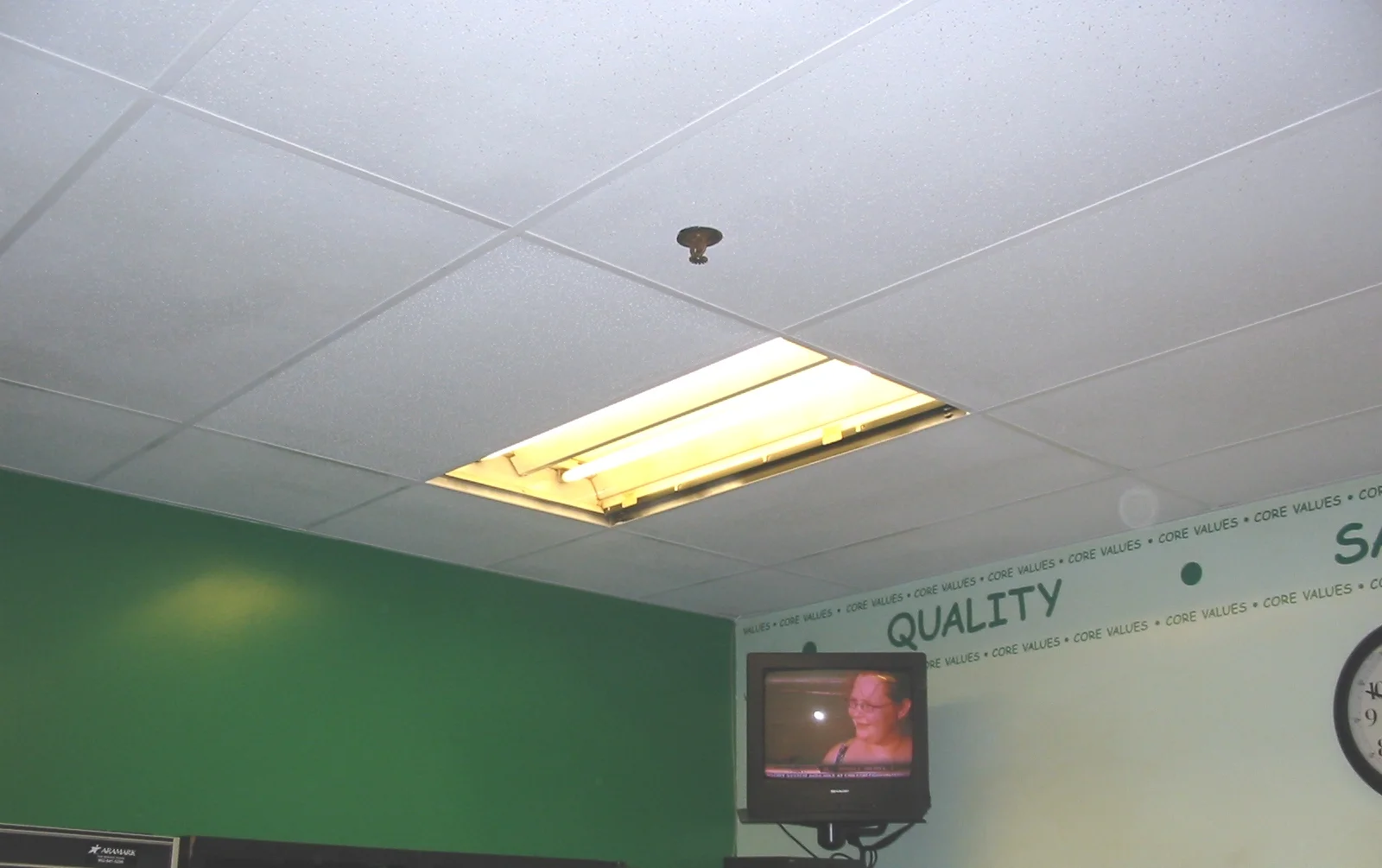
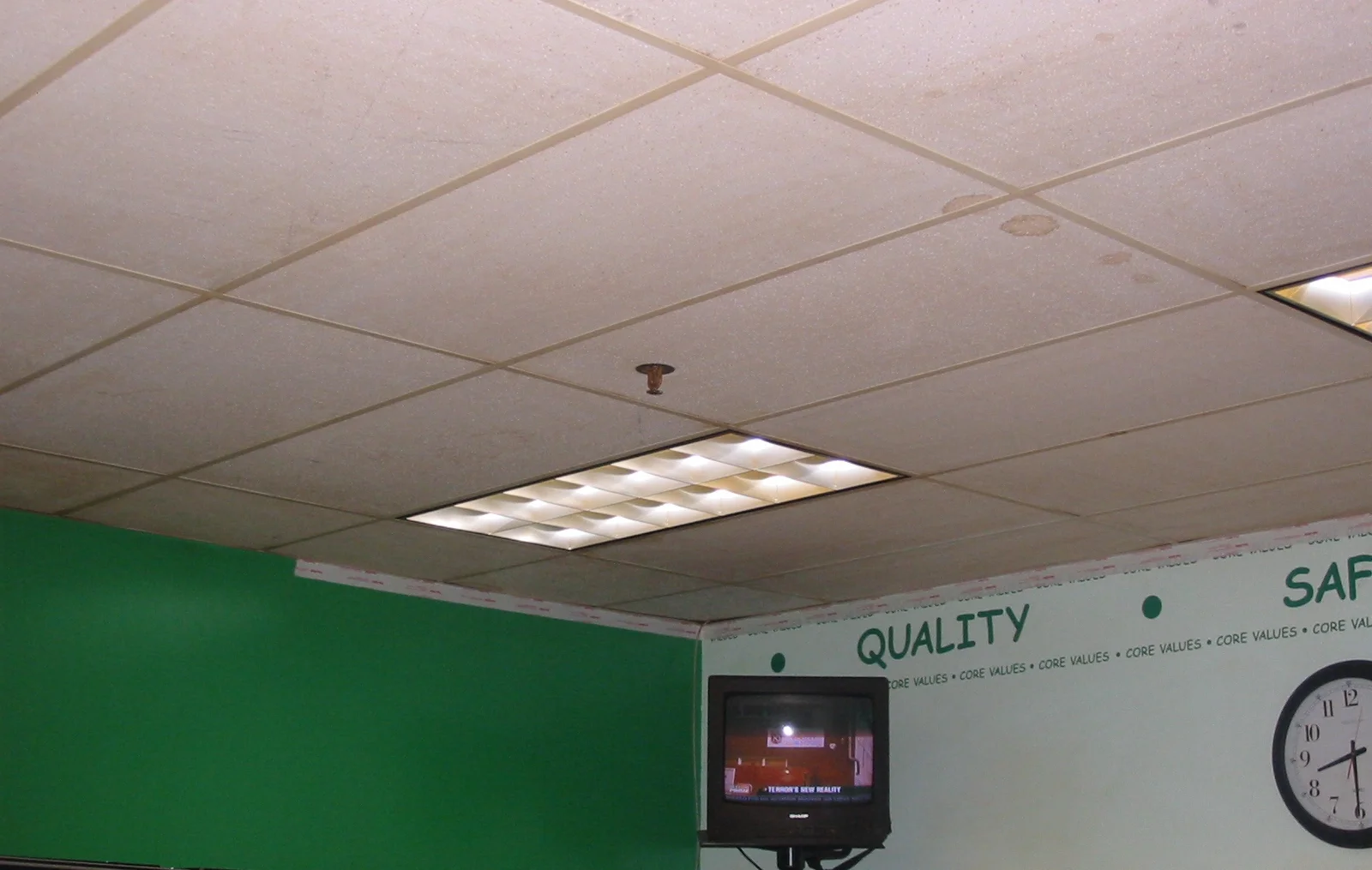
Mid-service comparison in office meeting room - original condition (left) compared to cleaned section (right) demonstrates the cost-effective transformation
What Affects the Cost
Square Footage
Larger facilities benefit from economies of scale. Setup time affects per-square-foot pricing.
Tile Type
Vinyl-coated tiles clean easier than porous acoustic tiles. Smooth surfaces wipe down quickly.
Stain Severity
Light dust takes minimal effort. Heavy grease or years of nicotine require stronger solutions and more time.
Ceiling Height
Standard 9-foot ceilings allow step ladders. 20-foot industrial ceilings require lifts and certified operators.
Access Difficulty
Empty spaces clean faster than occupied areas. Working around furniture and equipment increases costs.
Typical Price Ranges
Standard Office Cleaning: $0.75 - $1.50 per sq ft
Normal dust, light staining, standard ceiling heights. Most offices fall into this range.
Heavy Soil Conditions: $1.50 - $2.50 per sq ft
Commercial kitchens, industrial facilities, severe staining. Requires specialized solutions and multiple passes.
Full Replacement: $5 - $15 per sq ft
Includes new tiles, professional installation, and business disruption. Specialty tiles push toward higher end.
Actual Numbers Example: 10,000 sq ft Office
Cleaning costs: $12,500 (at $1.25 per square foot for moderate soil)
Replacement costs: $80,000 (at $8 per square foot average, including materials and labor)
Savings: $67,500 (84% cost reduction)
Ceiling Tile Cleaning Across Arizona
We provide commercial ceiling tile cleaning throughout Arizona's major markets. Our teams serve restaurants, medical facilities, office buildings, and industrial properties with the same professional standards.
Phoenix Metro
Serving commercial properties throughout the Valley, from downtown high-rises to suburban office parks.
Tucson Area
Professional ceiling cleaning for commercial facilities throughout Tucson and surrounding communities.
Can't find your city? We serve additional Arizona communities. Contact us to check service availability in your area.
Ready to Restore Your Ceiling Tiles?
The ceiling tiles in your facility either qualify for cleaning or they don't. Surface problems—grease, dust, water stains, nicotine, HVAC soot—typically clean to near-original condition for a fraction of replacement cost.
Case Example
Facility profile: 10,000 sq ft office building, standard 2x4 acoustic tiles with moderate nicotine staining and HVAC dust.
Replacement quote: $80,000 all-in (materials, labor, disposal, disruption).
Professional cleaning: $12,500, completed after-hours over two nights, no business disruption.
Result: 85-90% visual restoration, facility leadership approved selective replacement of 30 tiles (less than 3% of the ceiling) where staining was too deep. Net savings: $64,000.
Serving Phoenix, Scottsdale, Tucson, Mesa, and surrounding Arizona communities
Licensed • Insured • 10+ Years Experience