
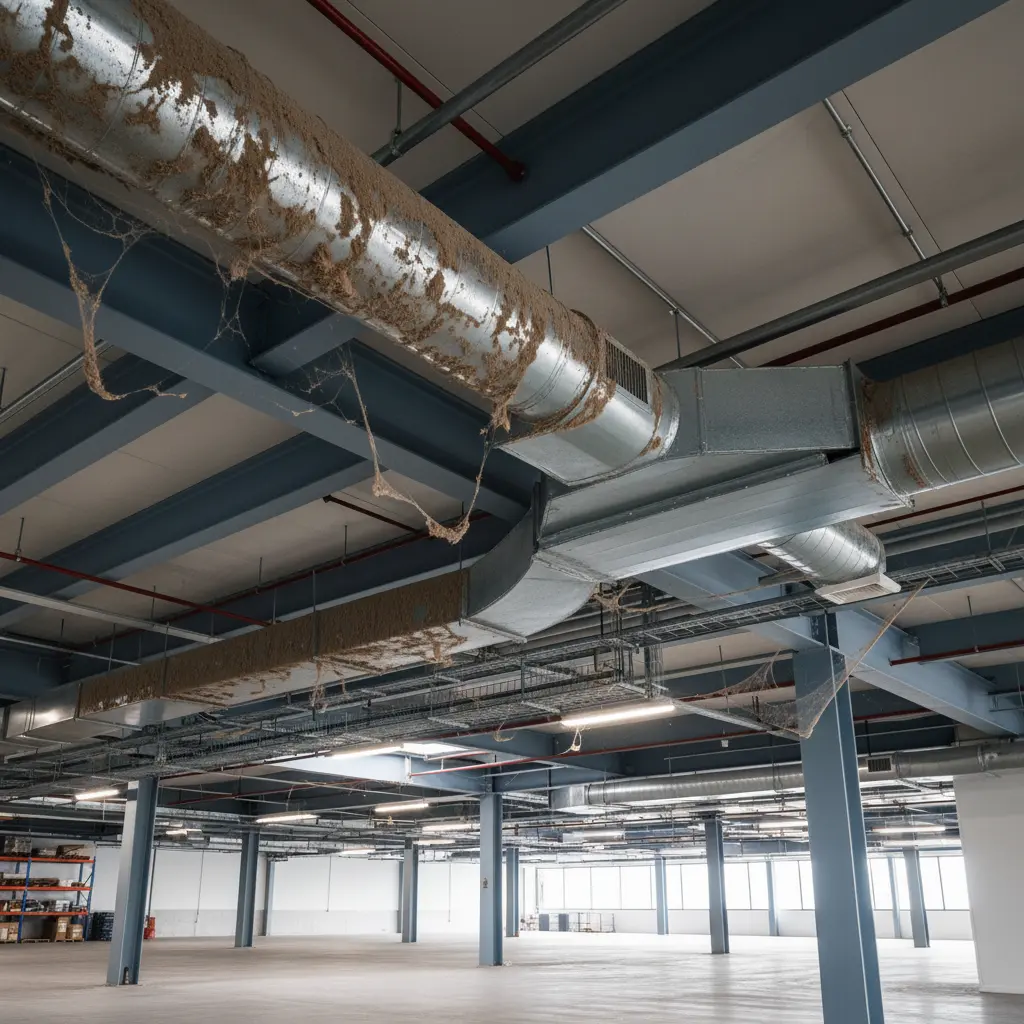

What is Commercial High Dusting?
Commercial high dusting covers the cleaning of surfaces more than 8–12 feet high that routine cleaning misses. These elevated areas collect dust, allergens, cobwebs, and debris over time, even when floors and desks remain spotless.
We're talking about the spots your regular cleaning crew can't reach from the ground or a standard stepladder. High dusting targets these overlooked areas before dust buildup creates health risks, compliance issues, or visible grime hanging overhead.
Common High-Dusting Areas
Walk through any commercial facility and look up. Dust accumulates on surfaces people rarely see but that directly affect air quality and facility appearance:
Ceilings and structural elements
Ceiling tiles, exposed beams, rafters, trusses, and skylights all gather buildup. The upper corners of rooms become perfect nests for cobwebs.
HVAC and ventilation systems
Ceiling vents, grilles, ductwork exteriors, and return air registers accumulate debris that affects air quality.
Lighting and electrical fixtures
Overhead light fixtures, exit signs, ceiling fans, track lighting, and pendant lights all show buildup over time.
High ledges and surfaces
Window sills, door frames, tops of cabinets, partition walls, crown molding, and pipe runs catch everything floating through the air.
Equipment and fixtures
Fire sprinkler heads, security cameras, speakers, hanging signs, cable trays, and warehouse rack crossbeams accumulate dust that's rarely addressed.
From the ground these surfaces often appear clean. A closer look reveals substantial buildup. In some facilities we've seen dust layers thick enough to write in after just six months without high dusting.
Height Categories and Access Requirements
Not all high dusting needs the same approach. The industry typically breaks high dusting into categories based on height:
Low-level high dusting (8–15 feet)
Covers tops of door frames, standard office partitions, and lower ceiling fixtures. These areas are often reachable with extension poles or small step ladders from the ground. Maintenance teams might handle these zones if properly equipped.
Standard high-level work (15–25 feet)
Includes most commercial ceilings, warehouse mid-level beams, and retail track lighting. This requires telescoping vacuum poles, extension tools, or scissor lifts to access safely.
Extreme high-level cleaning (25–40+ feet)
Tackles warehouse roof decking, industrial plant rafters, atrium ceilings, and convention center beams. We need boom lifts, scaffolding, or specialized 30–40 foot extension equipment operated by trained professionals for these heights.
The height determines equipment needs, safety protocols, and whether your in-house team can handle it or if you need professional high dusting services with lift certifications and specialized tools.
What High Dusting Actually Removes
High dusting pulls down more than visible dust. These elevated surfaces collect:
- Particulate matter includes fine dust from HVAC systems, outdoor air, construction, manufacturing processes, and simple daily activity that settles on elevated surfaces.
- Allergens multiply in settled dust. Dust mites thrive in these areas. Their waste and body fragments trigger asthma and allergic reactions in facility occupants.
- Cobwebs and insect debris collect in undisturbed high corners. Spiders build webs where nobody cleans. Dead insects accumulate in light fixtures over time.
- Grease and grime coat ceiling surfaces in restaurants and commercial kitchens. Airborne grease rises during cooking and creates sticky buildup that attracts more debris.
- Industrial residue builds up in manufacturing facilities. Regular cleaning prevents specialized dust from wood, metal, flour, textiles, or chemical processes from accumulating to combustible levels.
The challenge with high dusting is gravity works against you. Dust settles from the top down. If you never clean the ceiling, you'll forever be recleaning the dust that drifts down onto desks, products, and floors below.
Why Professional Methods Matter
Proper high dusting captures this material at the source rather than just pushing it around to resettle elsewhere. That's why professionals use HEPA vacuum systems with extension wands rather than feather dusters that simply stir dust into the air.
Why Commercial High Dusting is Critical (Not Optional)
Most facility managers keep floors spotless and wipe down every visible surface. But dust settling on beams 20 feet overhead gets ignored for months or years. That oversight creates costly problems: health complaints, safety violations, failed inspections, and equipment breakdowns that could have been prevented.
We've seen facilities face serious consequences from neglecting high surfaces. A restaurant fails its health inspection because of dust on ceiling vents. A manufacturing plant gets an OSHA citation for allowing combustible dust to accumulate beyond safe limits. An office building fields complaints about stuffy air and allergies. These aren't rare edge cases. They happen regularly when high dusting gets pushed to "someday."
Indoor Air Quality and Health Protection
Dust sitting on rafters, vents, and light fixtures doesn't stay there forever. It falls. It circulates. It gets pulled into HVAC systems and redistributed throughout your building.
That dust carries allergens that trigger asthma and respiratory issues. Dust mites thrive in accumulated dust, and their waste becomes airborne. The EPA Indoor Air Quality guidelines identify dust control as critical for reducing allergen exposure, especially in schools where children spend hours breathing recirculated air.
Documented Results from Arizona Facilities
In our work with Arizona office buildings, facility managers tell us they notice fewer employee complaints about stuffy air and allergies after we clean their high surfaces. This makes sense. When we vacuum a vent that hasn't been touched in two years, we're removing pounds of accumulated allergens that were slowly filtering into the workspace.
Regulatory Compliance: OSHA, FDA, and Industry Standards
Ignoring high surfaces can put you out of compliance with workplace safety and sanitation regulations.
The OSHA General Duty Clause requires workplaces to maintain clean conditions free of excessive dust accumulation. Inspectors don't just look at floors. We've worked with industrial clients who received citations specifically for dust buildup on overhead pipes and structural beams. Those citations come with fines and deadlines for corrective action.
Food industry facilities face even stricter requirements. Health inspectors flag dust on ceiling vents, pipes, or equipment as potential contamination sources. Restaurant owners have told us about failing inspections because of cobwebs and dust overhead, even when their kitchen equipment was spotless.
Consequences of Violations
The consequences of violations include fines, mandatory corrective action plans, temporary shutdowns, and in severe cases, loss of operating licenses. Scheduled high dusting costs far less than dealing with those outcomes.
Preventing Combustible Dust Hazards
In industrial and manufacturing environments, preventing dust buildup is critical to avoid fire and explosion risks that can be catastrophic.
Many common materials become dangerous when accumulated as fine dust: wood sawdust, flour, metal shavings, textile lint, grain dust, and plastic particles. NFPA standards adopted by OSHA recommend keeping dust layers under 1/32 inch thick on surfaces. That's about the thickness of a paperclip. Regular cleaning prevents dust from reaching this hazardous threshold.
A spark from welding, static electricity, or electrical equipment can ignite suspended dust clouds or thick surface accumulations. We've seen facilities where dust hung in rafters for years, creating a combustible layer just waiting for an ignition source. Consistent high dusting prevents this dangerous buildup.
Prevention Through Proper Cleaning Methods
OSHA recommends vacuum-based dust collection rather than sweeping or blowing, which can create explosive dust clouds in the air. Following proper protocols for high surfaces prevents the hazard of disturbing accumulated dust from 30 feet up.
Industrial safety managers understand this. One client in a metal fabrication facility schedules high dusting every month specifically to keep dust below combustible limits. Regular cleaning prevents the accumulation that creates unacceptable risk.
Protecting Building Systems and Equipment
Dust accumulation degrades the performance and lifespan of your facility's systems.
When HVAC vents get clogged with dust, airflow decreases and the system works harder to maintain temperature. This reduces efficiency and increases energy costs. Dust-coated fan blades strain motors. Over time, this extra wear shortens equipment lifespan.
We've cleaned facilities where thick dust on ventilation equipment was contributing to HVAC failures that required expensive emergency repairs. Regular high dusting prevents that accelerated wear.
Professional Image and Customer Perception
Visible dust and cobwebs overhead signal neglect, even when everything at eye level looks pristine.
Hotel guests notice dusty vents in their rooms. Restaurant customers see cobwebs in ceiling corners. Office tenants wonder about air quality when dust coats the conference room fixtures. Retail shoppers feel less confident about product quality when dust is visible on high shelves or lighting.
The challenge with overhead dust is that once it becomes noticeable from the ground, it's often severe. By the time someone spots it, the accumulation is months or years old.
Preventing the Dust Trickle-Down Problem
Here's the practical truth: dust settles from the top down. If high surfaces stay dirty, dust continuously falls onto the areas you clean regularly.
We hear this frustration from facility managers. Their staff dusts desks every day, but dust reappears quickly. The source is overhead: vents blowing dusty air, particles falling from beams and light fixtures, accumulation on high ledges slowly migrating downward.
Cleaning the top eliminates the source. After a thorough high dusting, facilities report that their regular cleaning becomes more effective and lasts longer. This isn't surprising. When you remove pounds of dust from ceiling-level sources, there's simply less dust circulating through the environment.
Bottom Line
Regular high dusting isn't optional for facilities that take health, safety, compliance, and professional standards seriously. It's a necessary component of comprehensive facility maintenance.
How Often Should You Schedule High Dusting?
The right high dusting schedule depends on what's happening in your facility. We've seen warehouses that need monthly service and corporate offices that go six months between cleanings. Both approaches work because they match the conditions.
The challenge is that high surfaces don't show problems until dust becomes visible from the ground. By then, it's been building for months. A regular schedule prevents that situation and keeps dust from becoming a compliance issue or health concern.
What Affects How Fast Dust Builds Up
- Dust generation level matters most. Manufacturing plants, woodworking shops, or facilities with heavy forklift traffic create dust constantly. A quiet accounting office with sealed windows generates very little.
- Foot traffic and activity stir existing dust into the air where it settles on high surfaces. A busy warehouse with constant movement needs cleaning more often than a rarely used storage facility.
- Location and environment play a role too. Facilities near construction sites, in desert climates like Arizona, or with loading docks that stay open accumulate dust faster.
- Industry regulations sometimes set minimum frequencies. Food processing plants might schedule overhead cleaning monthly to meet audit standards. Healthcare facilities clean high surfaces to comply with infection control protocols.
Industry-Specific Frequency Guidelines
Different facility types face different dust accumulation rates:
| Facility Type | Typical Frequency | Main Drivers |
|---|---|---|
| Corporate offices | Quarterly (3-4 months) | Employee health, professional appearance |
| Healthcare facilities | Monthly | Infection control, patient safety, compliance |
| Industrial/Manufacturing | Monthly to continuous | Prevent combustible dust hazards, OSHA compliance |
| Warehouses | Every 3-6 months | Worker safety, fire prevention, inventory protection |
| Food service/Processing | Monthly | Health inspections, contamination prevention |
| Retail stores | Quarterly | Product protection, customer perception |
| Schools | 2-3 times yearly | Student health, allergen control (often during breaks) |
| Hotels/Hospitality | Quarterly to monthly | Guest experience, appearance standards |
| Data centers | Every 3-4 months | Equipment protection, overheating prevention |
These are starting points, not rules. We've seen restaurants in particularly dusty locations schedule every three weeks, and clean office buildings stretch to twice yearly without issues.
Signs It's Time for High Dusting
Even with a schedule, watch for these indicators that cleaning is overdue:
- Visible dust from ground level means you waited too long. If you can see dust on vents, beams, or light fixtures without climbing, there's substantial buildup.
- Allergy complaints or respiratory issues from staff or occupants can signal that dust is circulating from high surfaces.
- HVAC performance problems sometimes trace back to dust-clogged vents and returns. When your system works harder than it should or rooms don't cool evenly, check the high-level vents.
- Dust on freshly cleaned surfaces shortly after janitorial service suggests it's falling from above.
- Failed inspections or citations are the costliest signal. Prevention costs far less than fixing violations under deadline pressure.
High Dusting Frequency Calculator
Find out how often your facility needs professional high dusting service
Most facilities: 1,000-100,000 sq ft
High dusting: typically 14+ feet
OSHA, health department, fire marshal inspections
Please enter square footage and ceiling height
Proactive Scheduling Beats Reactive Cleaning
The difference between scheduled high dusting and emergency service is substantial. When we get calls from facilities facing inspection deadlines or compliance violations, the work costs more and takes longer because the buildup is severe.
Recommendation
We recommend treating high dusting like HVAC filter changes or fire extinguisher inspections. Pick a frequency based on your facility type and conditions, put it on the calendar, and stick to it. Inspect high surfaces between cleanings to confirm the interval works.
Most facilities find their rhythm within a year. The first cleaning establishes a baseline. The second confirms whether the interval was right. After that, it becomes routine maintenance rather than a recurring problem.
High Dusting Methods: Equipment, Techniques & Safety
Getting dust off a surface 30 feet above the floor takes more than good intentions and a ladder. Over the years, we've learned that the difference between effective high dusting and just moving dust around comes down to three things: using equipment that actually captures particles, following a method that prevents re-contamination, and keeping everyone safe while doing it.
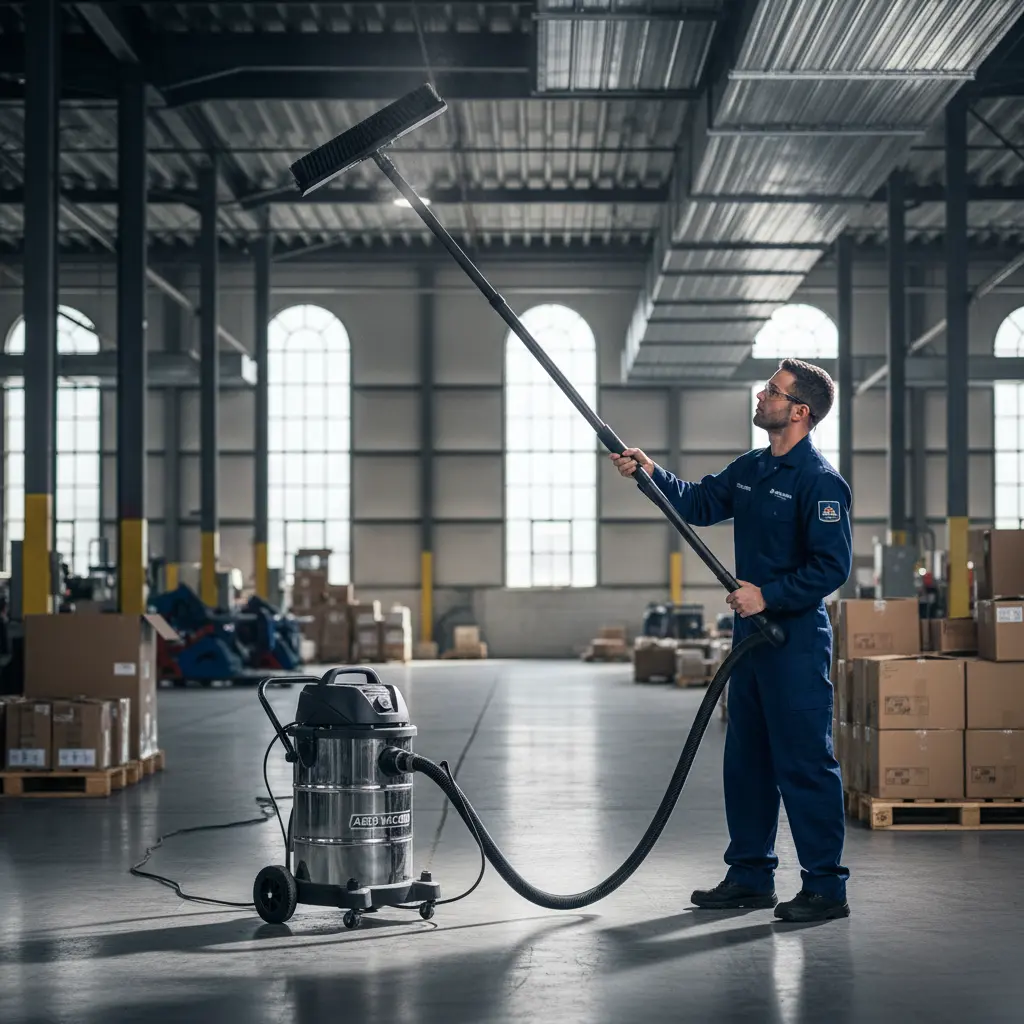
Professional HEPA vacuum with extension pole
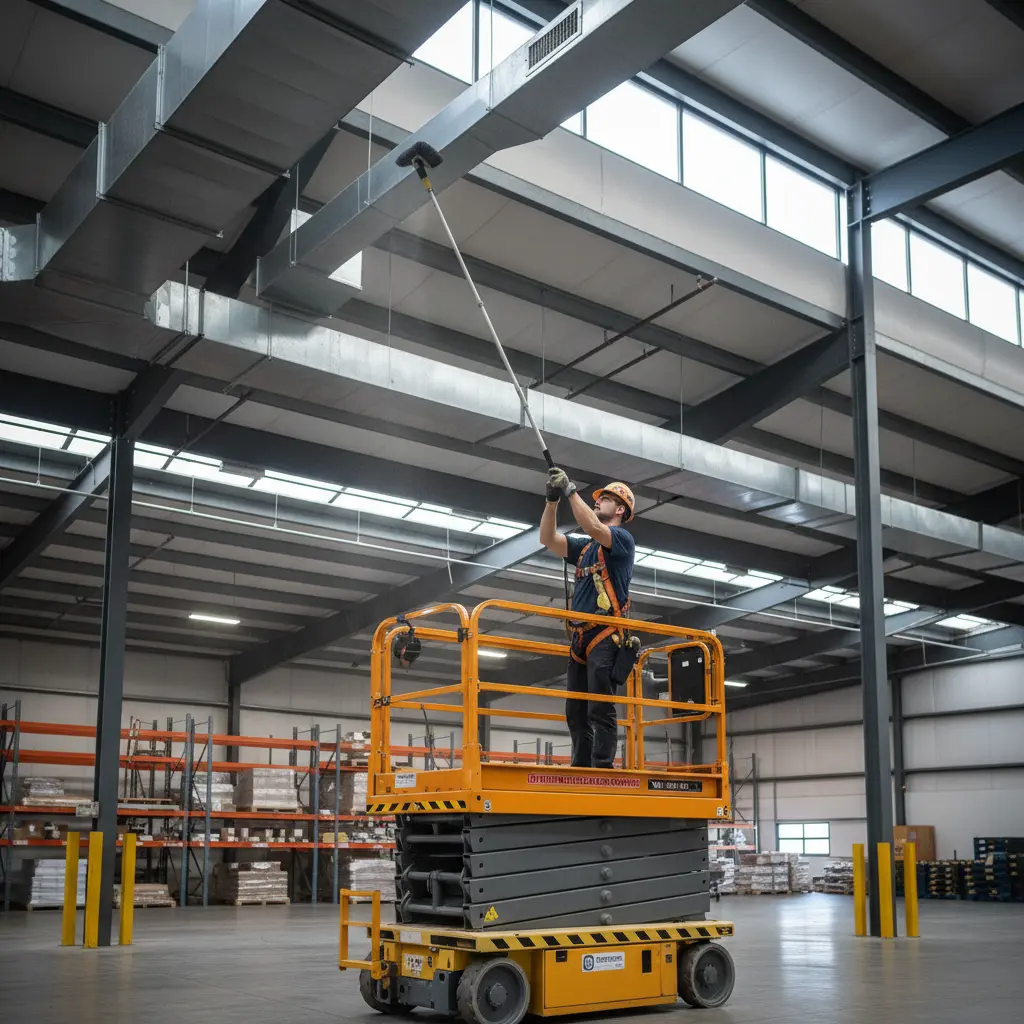
Certified operator on scissor lift platform
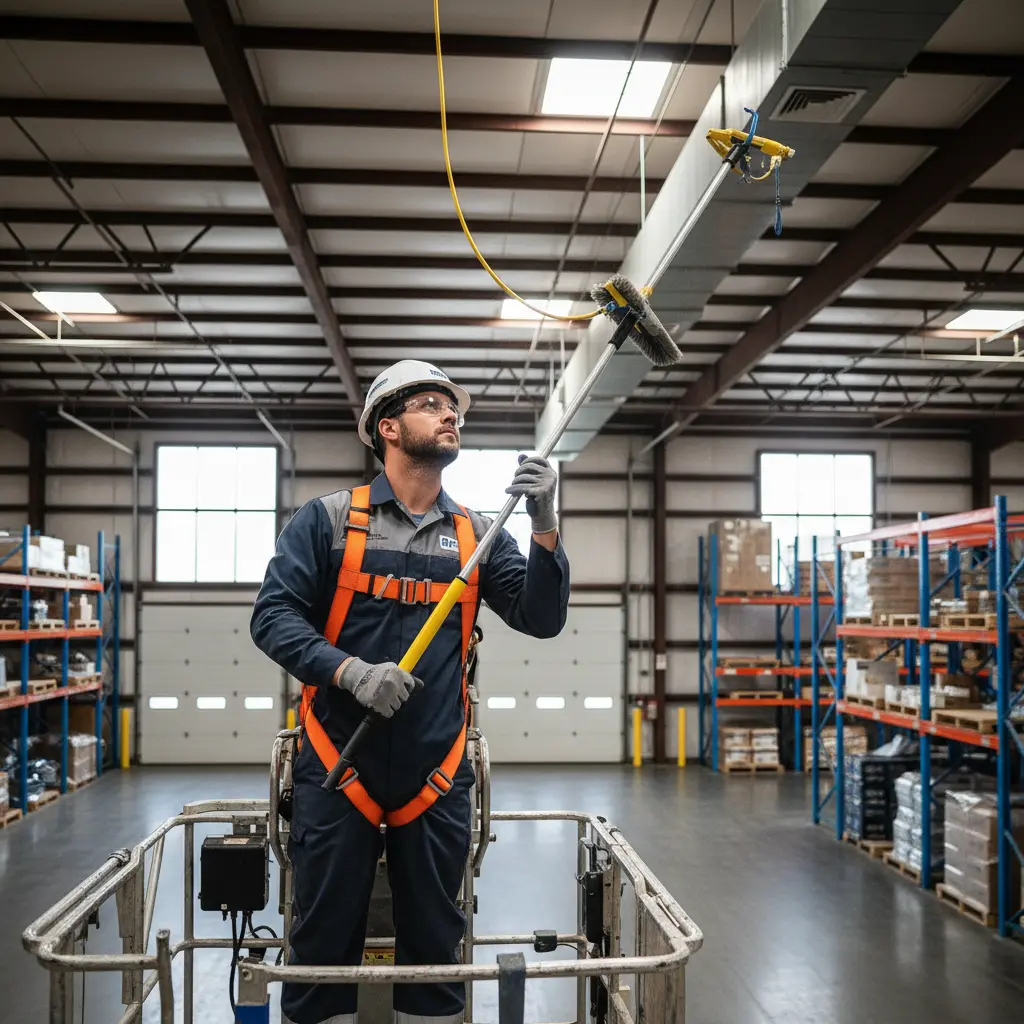
Fall protection and PPE in use
HEPA Vacuum Systems vs Traditional Dusters
OSHA recommends vacuuming as the primary method for collecting settled dust, and there's a reason for that. Vacuums with HEPA filtration actually remove dust from the environment instead of redistributing it.
Traditional dusters (even the microfiber kind on extension poles) dislodge dust but don't contain it. That works fine for a desk where you can immediately wipe up what falls, but when you're dusting a beam 20 feet up, those particles drift through the air and resettle across the facility.
HEPA Filtration Standard
HEPA vacuum systems trap particles as small as 0.3 microns with 99.97% efficiency. For high dusting, these systems typically include telescoping wands that extend 20-40 feet with specialized brush heads designed for different surfaces.
Extension Tools and Specialized Equipment
Reaching high surfaces without climbing requires the right extension tools. These range from simple telescoping poles to sophisticated remote-controlled systems.
Telescoping poles
Extend anywhere from 8 to 40 feet and accept different attachments. Basic poles use threaded fittings to hold dusting pads, brushes, or vacuum heads. Better systems use quick-release couplers that let you swap tools without lowering the pole.
Angled brush heads
Help reach into corners and around obstructions. Different brush stiffnesses match different surfaces: soft bristles for delicate fixtures, stiff bristles for caked-on grime on structural beams.
Vacuum wand systems
Systems like SkyVac include built-in video cameras at the head, letting operators see exactly what they're cleaning on a screen at ground level. This verification step ensures thorough coverage without guessing.
Access Equipment: Ladders, Lifts, and Platforms
Working at height requires equipment matched to both the elevation and the work environment.
- Step ladders and extension ladders handle low-level high dusting (typically under 15 feet). OSHA requires ladders to extend at least 3 feet above the landing point and be placed on stable ground at the proper angle.
- Scissor lifts provide a stable platform for heights up to 40 feet and work well in open spaces like warehouses or retail floors. Operators must complete certification training.
- Boom lifts extend both up and out, reaching over obstacles and into tight spaces. We use these for complex ceiling systems with lots of ductwork, conduit, or other obstructions.
- Scaffolding makes sense for extended work in one area, like deep cleaning a production hall during a shutdown. Setup takes time but creates a stable platform that multiple workers can use simultaneously.
Safety Protocols and OSHA Compliance
High dusting poses three main hazards: falls from height, exposure to dust and allergens, and accidental contact with electrical or mechanical systems.
OSHA Fall Protection Requirements
Fall protection is mandatory for work above 6 feet on aerial lifts, scaffolds, or rooftops. Workers wear full-body harnesses connected to anchor points via shock-absorbing lanyards. OSHA requires 100% tie-off, meaning workers must be connected at all times when exposed to fall hazards.
Before using any lift or scaffold, we inspect it for defects: check hydraulics, look for damaged railings or planks, test controls. A quick walk-around takes two minutes and prevents equipment failures.
Respiratory protection
For general high dusting, an N95 respirator filters out most particles. In industrial settings where dust could be toxic or potentially combustible, we upgrade to P100 filters or supplied-air respirators depending on the hazard.
Area barricading
We use caution tape or barriers to mark off areas under high dusting operations. This protects both the workers (who may drop tools) and facility occupants (who could walk into dust clouds or fall debris).
Best Practice Methodology
Effective high dusting follows a specific sequence that prevents cross-contamination and ensures complete coverage.
Top-down approach
Always start at the highest point and work downward. Dust the ceiling structure first, then light fixtures and vents, then high walls and equipment, with floors last. This captures anything dislodged by upper-level cleaning.
Vacuum-first protocol
For heavily soiled surfaces, vacuum loose dust before wiping. Dry dust on a beam or pipe can be sucked away with a HEPA vacuum; wet-wiping that same surface without vacuuming first just turns dust into muddy smears.
Containment during cleaning
For particularly dirty areas or facilities with sensitive operations, we set up containment. This might mean plastic sheeting over equipment, drop cloths on the floor, or in extreme cases, full room isolation with HEPA air scrubbers running.
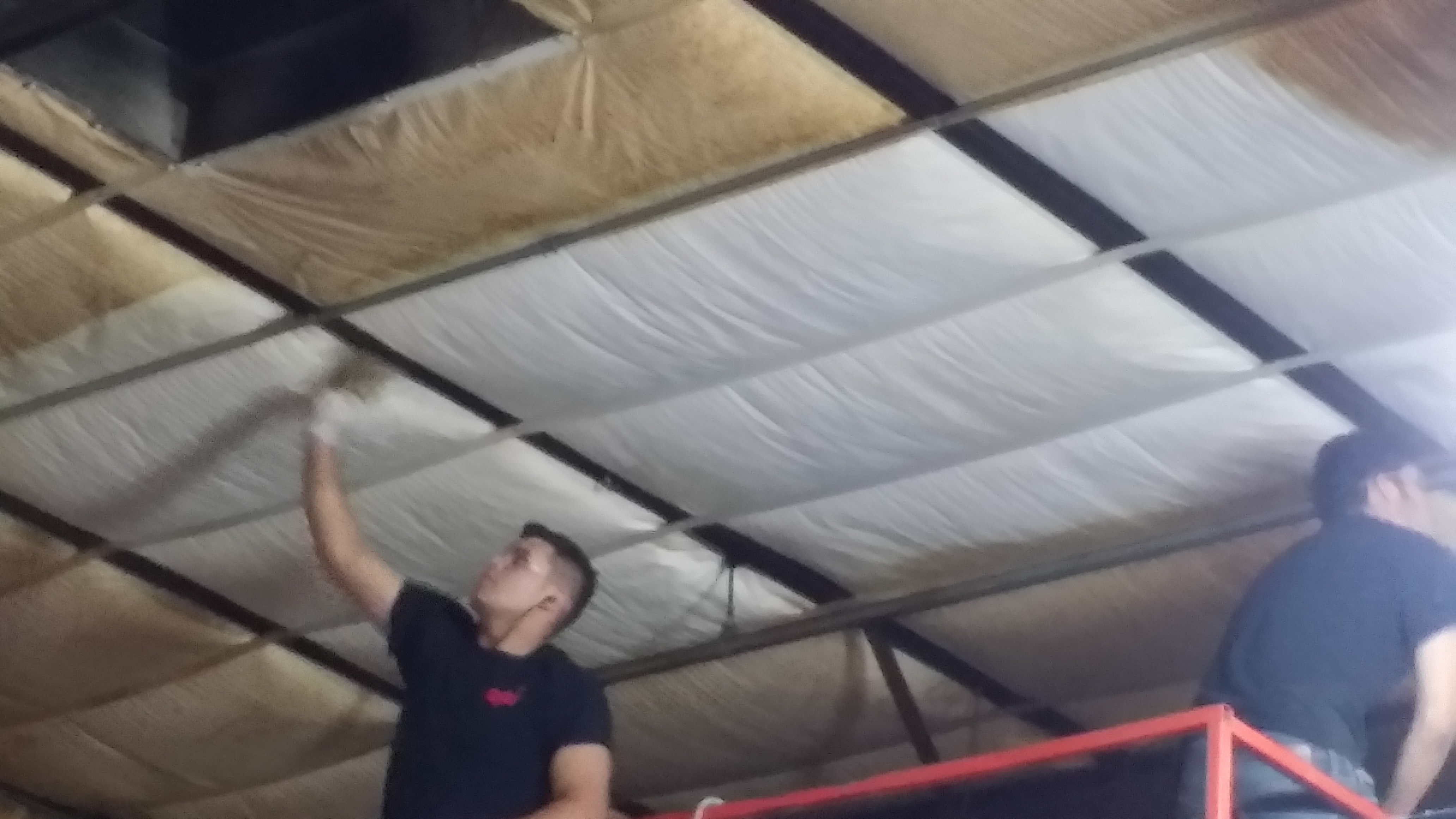
Professional containment setup with plastic sheeting protecting workspace during high dusting operations
Systematic coverage
We divide large spaces into zones and complete each fully before moving to the next. This prevents missing areas and provides clear progress tracking.
Industry-Specific High Dusting Requirements
Every commercial facility deals with dust settling on high surfaces, but the stakes change dramatically based on what happens inside those walls. A restaurant facing health inspections has different concerns than a factory manager preventing combustible dust hazards. Understanding these industry-specific requirements helps facility managers focus on what matters most in their environment.
Office Buildings and Commercial Property
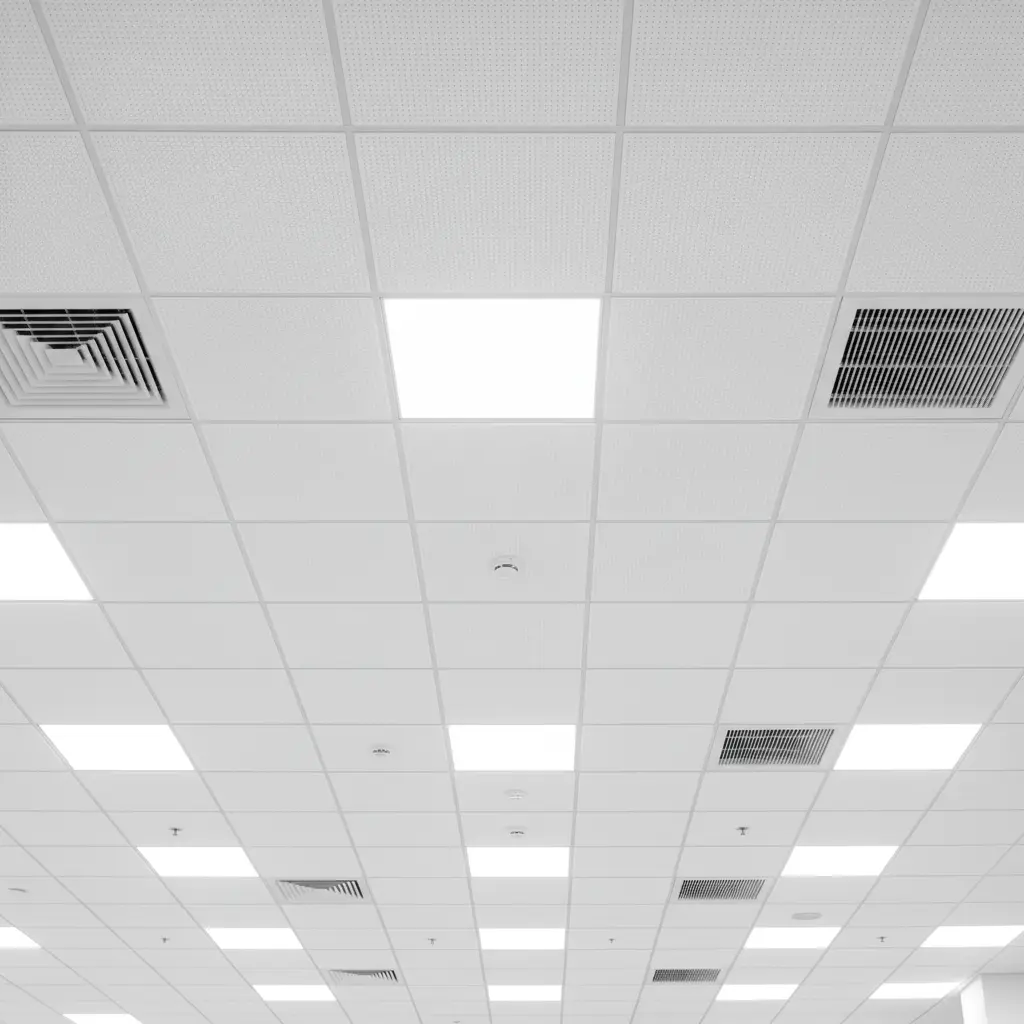
Class A office building with professionally maintained ceiling tiles and HVAC systems
Office property managers face a straightforward challenge: keeping tenants comfortable and the building looking professional. Dust on ceiling vents circulates allergens that lead to employee complaints about stuffy air or trigger asthma symptoms. When prospective tenants tour a space, dusty skylight ledges or cobwebs in conference room corners send the wrong message about building maintenance standards.
Class A office buildings maintain their status partly through consistent attention to details like clean HVAC grilles and dust-free crown molding. We see quarterly high dusting schedules work well for most office environments, with focus areas including ventilation registers, light fixtures, door frame tops, and elevator shaft vents.
The only consistent challenge is coordinating around tenant schedules to avoid disruption during business hours.
Healthcare Facilities
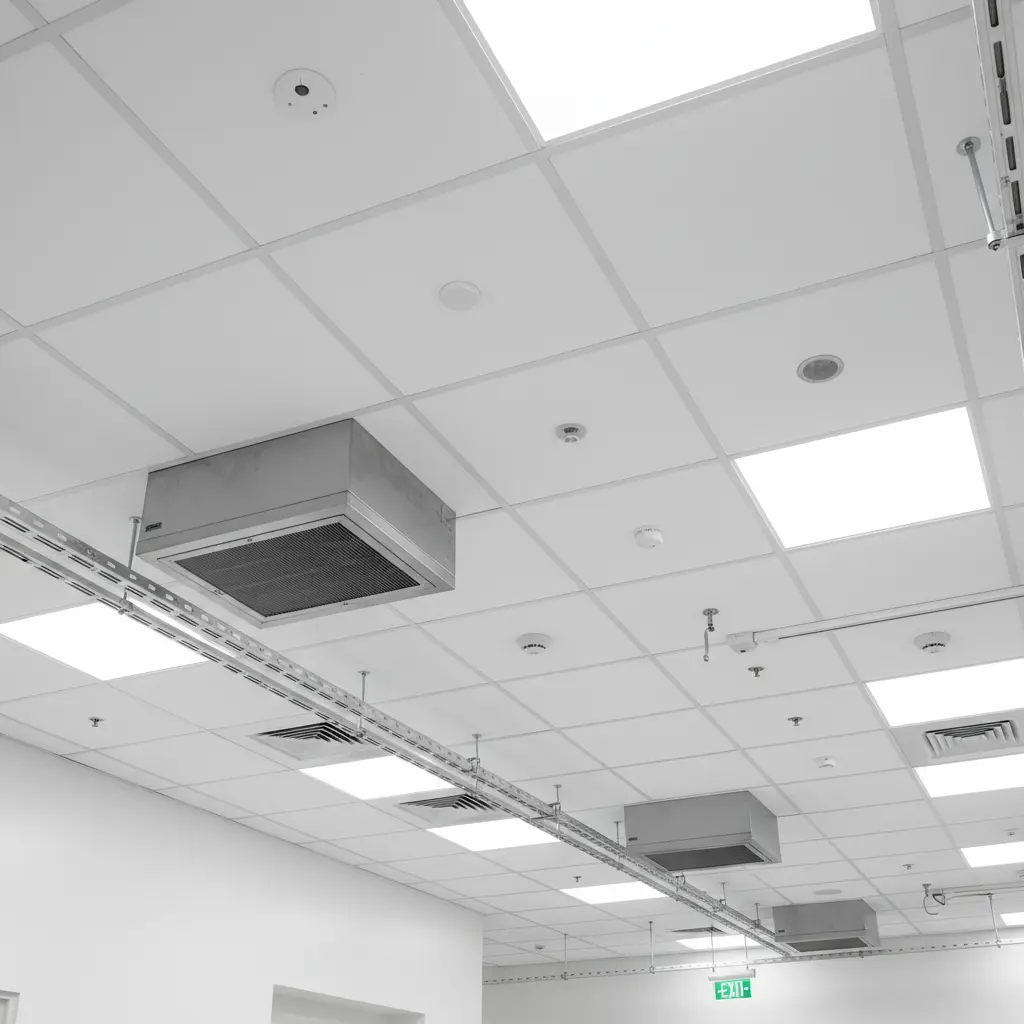
Healthcare facility meeting Joint Commission infection control standards - no visible dust
Hospital environmental services teams know that dust goes far beyond appearance concerns. The CDC warns that dust accumulation in healthcare settings creates infection risks, especially for immunocompromised patients. Construction dust or neglected ceiling areas can harbor bacteria and fungus that contribute to hospital-acquired infections.
Healthcare high dusting targets operating room vents, patient room ceiling tiles, laboratory ventilation systems, and corridor lighting fixtures. The Joint Commission expects facilities to show no visible dust during inspections, which means monthly cleaning in most areas and even more frequent attention in critical zones like surgical suites.
Healthcare-Specific Challenge
Healthcare facilities cannot tolerate any dust disturbance during cleaning, which requires specialized containment methods and HEPA filtration that goes beyond standard commercial protocols. This adds to the complexity and cost compared to office cleaning.
Schools and Educational Institutions
Student health drives school facility decisions, particularly around allergen control. The EPA points to dust mites in schools as known asthma triggers for students. A child struggling to breathe because of dusty classroom vents affects learning and can increase absenteeism.
School maintenance teams focus on gym rafters, auditorium light fixtures, classroom ventilation grilles, and cafeteria ceiling areas. Many schools implement Indoor Air Quality programs that include high dusting as a core component. Summer and winter breaks provide ideal windows for thorough cleaning without disrupting classes.
Older school buildings present the added concern of lead paint dust on high surfaces, requiring trained personnel and careful containment during removal.
Industrial and Manufacturing Facilities
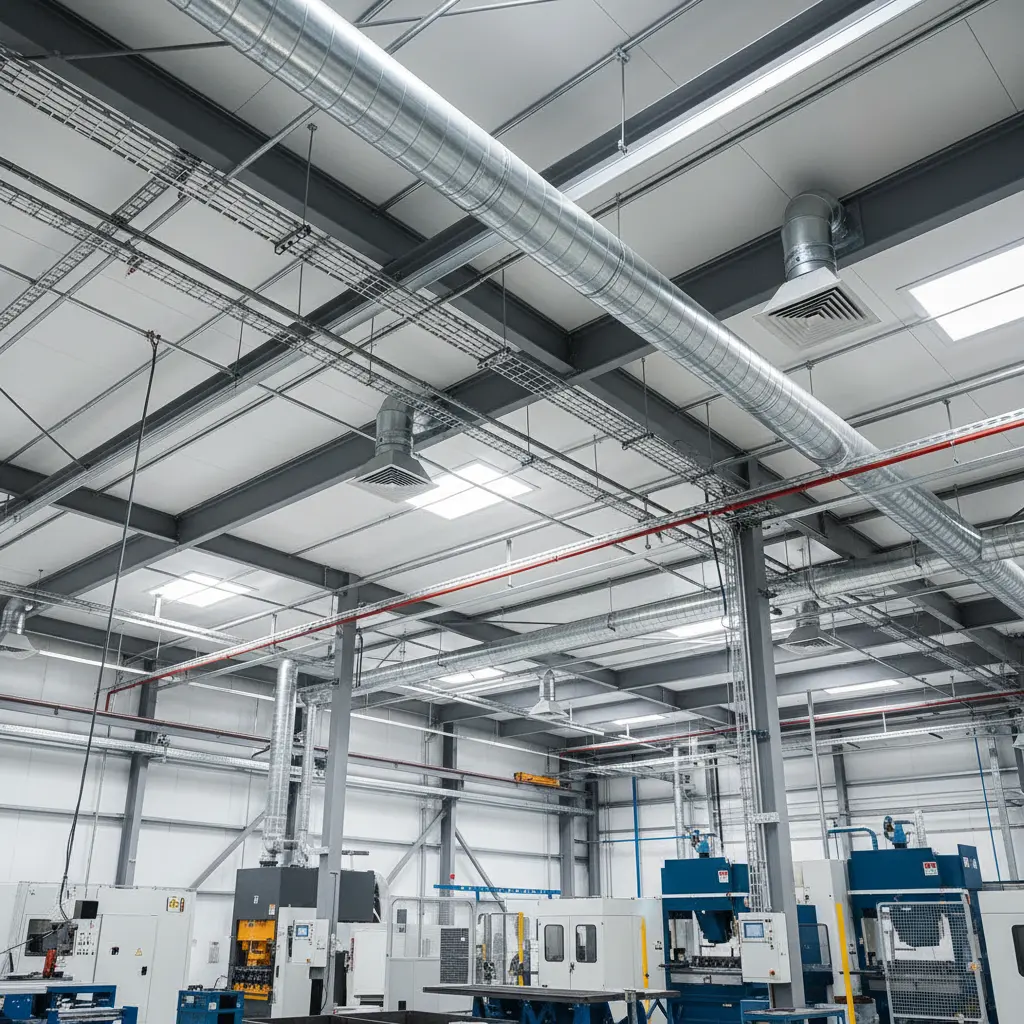
Manufacturing plant with clean overhead infrastructure - preventing combustible dust accumulation per OSHA standards
Factory managers deal with the most urgent high dusting requirements: preventing combustible dust hazards. Many industrial processes generate dust from cutting, mixing, grinding, or material handling. Regular cleaning prevents that dust from accumulating on rafters, beams, or high window ledges where it could become fuel waiting for ignition.
Prevention Through Regular Cleaning
OSHA guidelines recommend keeping dust layers under 1/32 inch thick to prevent flash fires and explosions. This isn't just about avoiding citations; facilities have experienced catastrophic dust explosions when housekeeping lapses allowed dangerous accumulation. Regular high dusting keeps levels below this critical threshold.
Industrial high dusting focuses on structural beams, cable trays, ventilation hoods, equipment tops, and any horizontal surface where dust settles—preventing it from reaching hazardous levels.
Manufacturing facilities often need monthly high dusting or even continuous dust removal systems in heavy production areas. Wood mills, metalworking shops, pharmaceutical manufacturers, and textile plants each have specific dust types requiring tailored approaches.
The challenge in industrial settings is coordinating around 24/7 operations while meeting aggressive safety timelines. Some facilities simply cannot afford production delays, which means working in tight windows or phasing the work across multiple shifts.
Warehouses and Distribution Centers
Warehouse managers balance worker safety, inventory protection, and fire prevention. Open high ceilings and exposed beams collect dust from forklift traffic, packing materials, and outdoor air infiltration. This dust can rain down onto stored products or create respiratory issues for workers handling goods below.
Fire risk increases when dust accumulates near electrical fixtures or lighting. We see warehouses scheduling high dusting every 3-6 months based on how quickly accumulation occurs. High-traffic distribution centers with constant door openings trend toward quarterly cleaning, while climate-controlled facilities storing finished goods might extend to twice yearly.
Target areas include roof girders, sprinkler system pipes, high rack cross-beams, skylights, and warehouse door tracks. Scissor lifts or extended vacuum poles reach these surfaces while operations continue in other zones.
Food Service and Processing
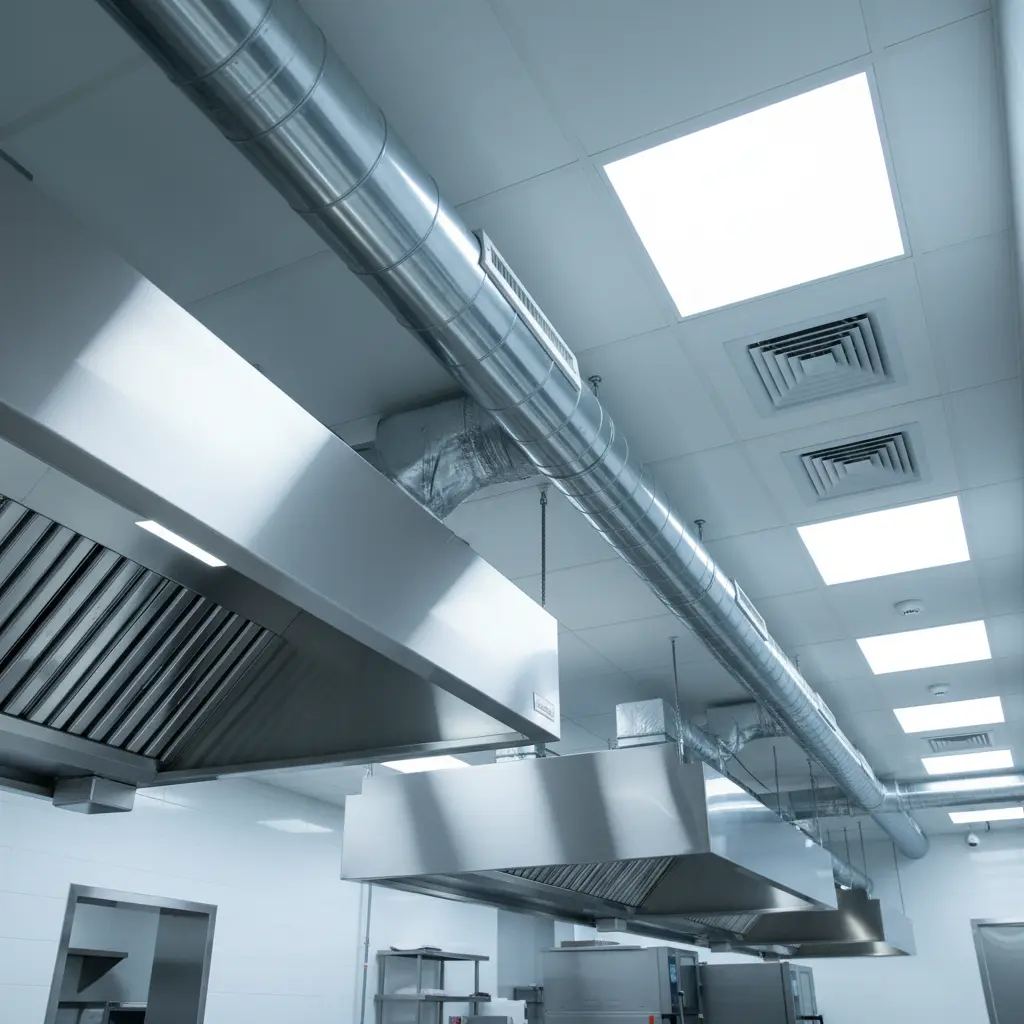
Commercial kitchen with spotless exhaust hood and ductwork passing health inspection standards
Restaurant owners and food plant managers know that health inspectors look up as well as down. Dust on ceiling vents, kitchen hood ducts, or overhead pipes creates contamination risks and leads to inspection failures. We regularly see violation reports citing dusty ceiling areas in both commercial kitchens and processing plants.
The FDA and USDA maintain zero tolerance for potential contaminants, which means dust or cobwebs overhead represent serious compliance failures. Grease combines with dust in kitchen environments, creating stubborn buildup that requires more aggressive cleaning methods than dry dust removal.
Food service facilities typically need monthly high dusting at minimum, with kitchen areas requiring more frequent attention. Processing plants coordinate deep cleaning during scheduled sanitation breaks.
The only challenge we encounter in food environments: scheduling around production or service hours while meeting sanitation requirements. Many facilities can only accommodate overnight cleaning when food preparation stops completely.
Retail Stores and Shopping Centers
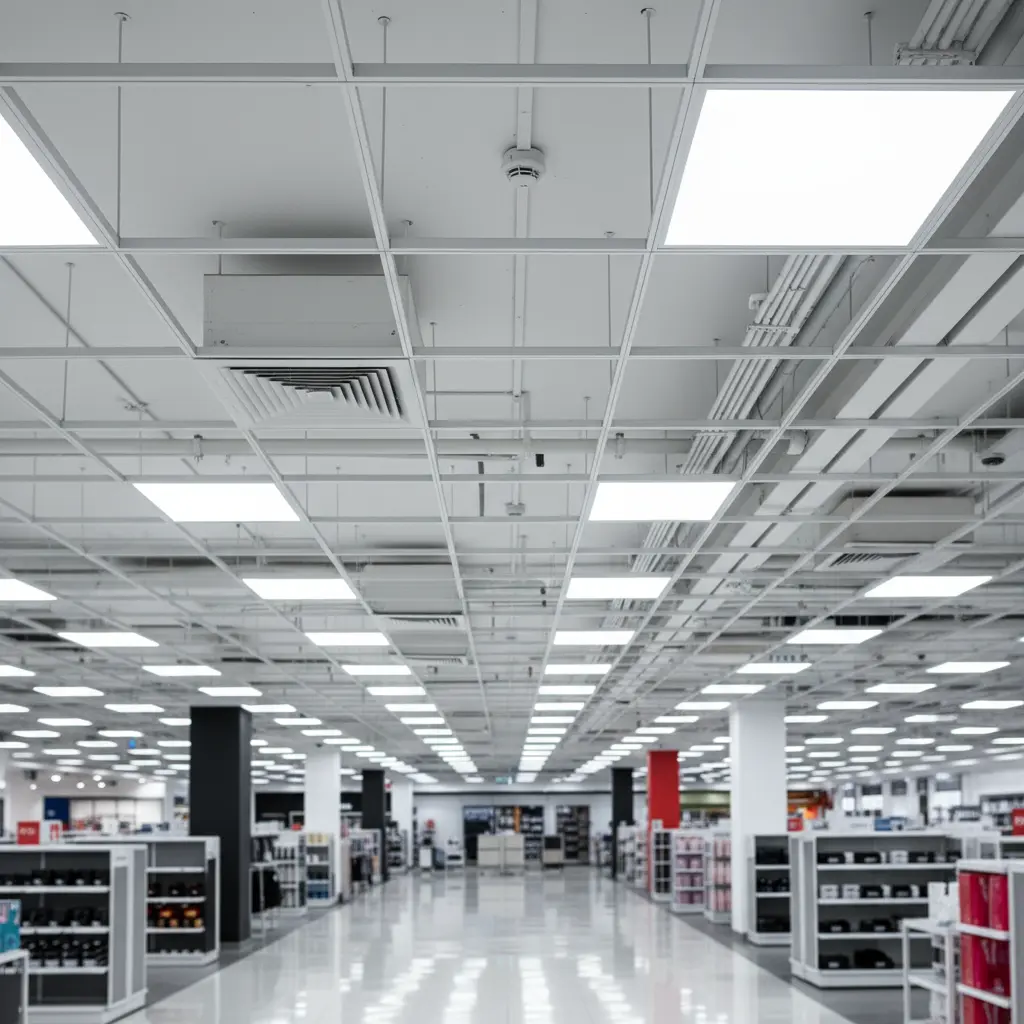
Retail store with pristine ceiling infrastructure protecting merchandise from dust contamination
Retail facility managers protect both customer experience and product integrity. Dust settling from overhead onto merchandise creates costly issues—imagine clothing displays or electronics covered in a fine dust layer. High shelf tops, ceiling-mounted HVAC ducts, and lighting tracks all shed dust onto products below if neglected.
Shopping mall maintenance teams coordinate high dusting in common areas like atriums, skylight surrounds, and multi-story open spaces. Big-box retailers often use overnight crews with scissor lifts to reach beams and tall fixture tops.
Most retail environments schedule quarterly high dusting or time it before major seasonal displays go up. The work typically happens after closing to avoid disrupting shoppers.
Hospitality Industry
Hotels, resorts, and event venues trade on immaculate environments where every detail matters. Guests notice dusty crown molding or AC vents in hotel rooms. Event lighting in ballrooms dramatically highlights any dust on chandeliers or ceiling beams, creating embarrassing visibility of neglected maintenance.
Housekeeping teams address high drapery valances, tall furniture tops, decorative ceiling elements, and HVAC components as part of deep cleaning rotations. Pool atriums and lobbies with soaring ceilings require specialized equipment to reach architectural details.
Hotels often rotate deep cleaning with high dusting through room inventory, ensuring every space gets thorough attention twice yearly. Event venues schedule major cleaning before peak booking seasons or after large conferences.
Specialized Facilities
Certain environments have unique dust control requirements based on sensitive operations or equipment protection.
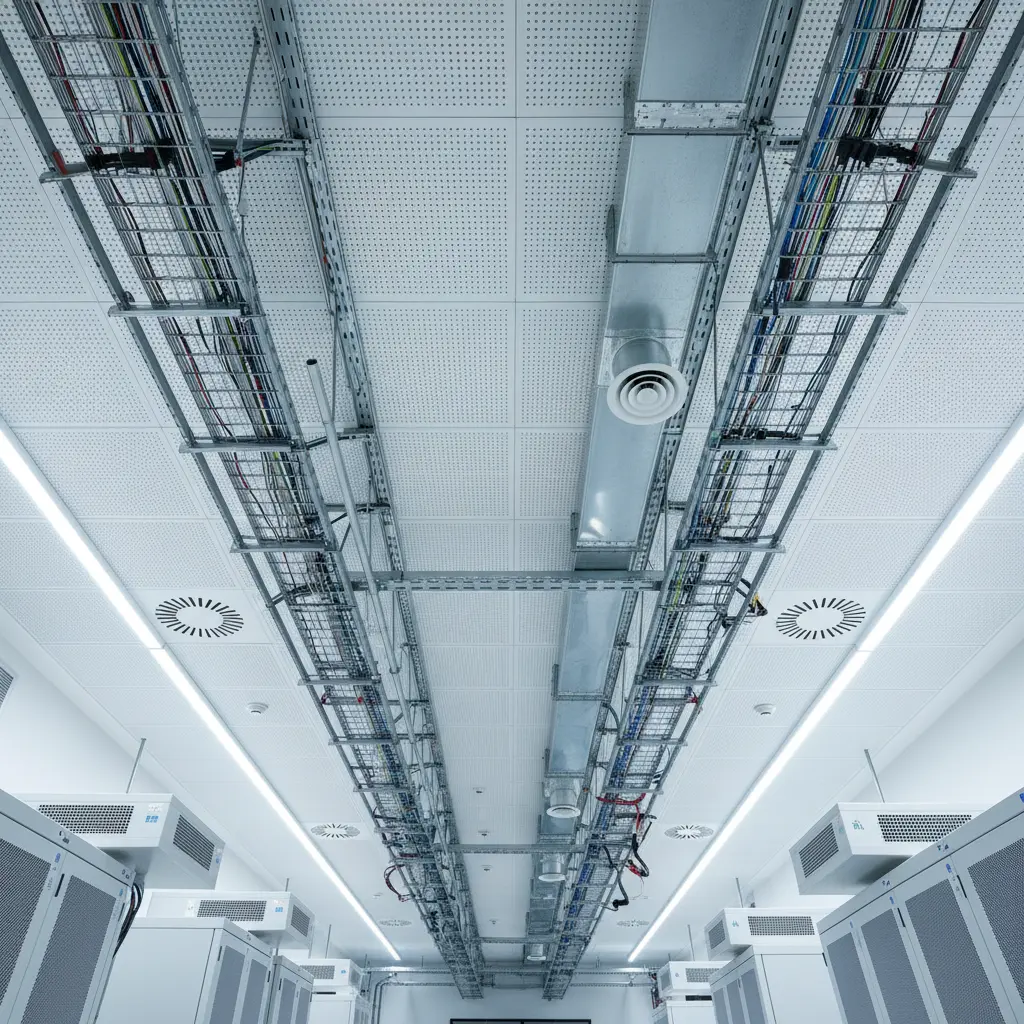
Data center with clean overhead cable trays preventing dust-related equipment failures
Data Centers
Data centers treat dust as an equipment threat. Particles clog server filters, create static discharge risks, and cause overheating in densely packed electronics. We clean cable trays, equipment tops, and overhead infrastructure quarterly or per manufacturer recommendations to prevent downtime.
Laboratories
Laboratories maintain strict contamination controls where stray dust can compromise experiments or research. High dusting of ventilation grilles, shelf tops, and ceiling fixtures happens on tight schedules using gentle HEPA vacuum methods.
Museums and Archives
Museums and archives require dust removal for both preservation and appearance. Dust deteriorates artifacts over time and attracts pests. Curators engage conservation cleaning specialists who use careful techniques on rafters, display cases, and vault ceilings.
Cleanroom Manufacturing
Cleanroom manufacturing for semiconductors or pharmaceuticals operates under extreme contamination controls. Even support areas surrounding cleanrooms need rigorous high dusting to prevent any particle migration into controlled environments.
Historic Buildings
Historic buildings present access challenges with ornate architecture and high vaulted ceilings. Churches, temples, and heritage structures need high dusting while protecting architectural details. We work with preservation guidelines and sometimes use specialized equipment like camera-equipped poles to document cleaning in hard-to-reach spaces.
Each specialized facility balances dust removal against operational requirements or preservation needs. The frequency and methods shift based on what's at risk—whether electronic equipment, scientific accuracy, or cultural heritage.
DIY vs. Professional High Dusting: Making the Right Choice
Deciding whether to handle high dusting with your own team or bring in professionals comes down to honest assessment of your situation. We've seen facilities make both choices work well, and we've also seen both approaches go wrong when the fit wasn't right.
The truth is that not every high dusting job requires professional help. Some facilities can manage their elevated surfaces safely and effectively with in-house staff. Others absolutely need specialized providers. The difference usually lies in height, complexity, and what's at stake if something goes wrong.
When Your Team Can Handle It
In-house maintenance can manage high dusting effectively when certain conditions line up:
- If your highest surfaces stay below 12 feet and your team can reach them safely from stepladders or short extension poles, you're in good territory for DIY.
- Your team needs proper equipment: commercial HEPA vacuums with extension wands, quality microfiber tools, and safe ladder access.
- Training matters. Staff should understand top-down cleaning methods, know not to blow dust around, and follow basic ladder safety.
When to Bring in Professionals
Some situations move beyond what in-house teams should attempt:
Height is the clearest factor
Once you're looking at surfaces above 12-15 feet, you're typically into scissor lift or boom lift territory. Operating aerial lifts safely requires specific training and certification. Insurance companies notice when untrained staff get on lifts. OSHA notices too.
Facilities with combustible dust concerns
If your facility generates wood dust, metal particulates, grain dust, or any material that could become combustible when accumulated, this isn't a job for general maintenance staff. Proper cleaning methods prevent dangerous buildup while using improper approaches can create hazards. Professional crews understand NFPA protocols for preventing accumulation to dangerous levels.
Compliance-critical facilities
A hospital that fails Joint Commission inspection over inadequate high dusting risks accreditation. A food processing plant that gets cited for overhead contamination risks shutdown. When regulatory consequences are severe, professional documentation and methodology provide protection.
Can Your Team Safely Handle This?
Walk through these questions honestly before committing to DIY high dusting:
Height and Access
- Are all surfaces under 12 feet high?
- Can staff reach everything safely from stepladders or short poles?
- Do you have stable, level surfaces for ladder placement?
Equipment and Tools
- Do you own commercial HEPA vacuums with extension capability?
- Can your equipment actually capture dust instead of spreading it?
- Do you have proper PPE including dust masks, safety glasses, and gloves?
Training and Capability
- Are staff trained in ladder safety and top-down cleaning methods?
- If lifts are needed, do operators have current certification?
- Does your team understand proper dust containment?
Risk and Compliance
- Does your facility need to prevent combustible dust accumulation with specialized protocols?
- Do regulatory inspections scrutinize your overhead cleanliness?
- Can you document cleaning dates and methods if required?
Hybrid Approach
The facilities we work with long-term usually land on a hybrid approach. Their teams handle accessible quarterly maintenance. We come in once or twice yearly for comprehensive cleaning of everything, including the spots their team can't safely reach. That combination keeps costs reasonable while ensuring nothing gets neglected.
How to Choose a Commercial High Dusting Service Provider
Not all high dusting providers operate the same way. Some send trained crews with proper equipment and insurance. Others show up with household ladders and feather dusters, then disappear when something goes wrong.
We've seen facility managers burned by companies that quoted low but cut corners on safety. We've also watched excellent providers lose bids because facility managers didn't know what questions to ask.
Essential Qualifications Checklist
Before you even schedule a quote, verify these baseline requirements:
OSHA Compliance and Safety Program
The provider should follow OSHA fall protection requirements for any work above 6 feet. Ask if their crew is trained on ladder safety, lift operation, and fall arrest systems. Companies working in industrial settings should understand protocols for preventing combustible dust accumulation and OSHA housekeeping standards.
Proper Insurance Coverage
General liability insurance is non-negotiable. Workers' compensation protects you if a crew member gets injured on site. For high-value facilities or work above 20 feet, ask about the policy limits. Get certificates of insurance before work begins.
HEPA Vacuum Equipment
Providers using only feather dusters or dry rags aren't removing dust. They're redistributing it. OSHA recommends vacuum collection for settled dust. Ask what equipment they use. Professional providers have commercial HEPA vacuum systems with extension poles.
Industry-Specific Certifications
Depending on your facility type, certain certifications matter. Food processing plants might want providers trained in GMP compliance. Healthcare facilities might require HIPAA awareness or infection control training. Industrial plants that need to prevent combustible dust accumulation need crews who understand NFPA prevention standards.
Questions to Ask Potential Vendors
A site visit and detailed conversation reveals more than a brochure. Here are questions that separate experienced providers from generalists:
"How do you access our ceiling heights safely?"
Listen for specifics about equipment. A provider tackling 30-foot ceilings should mention lifts, fall protection harnesses, and ground-level barricading. If they suggest just using tall ladders for extreme heights, that's a red flag.
"What's your process for containing dust during cleaning?"
Good answers include working top-down, using HEPA filtration, covering sensitive equipment, and scheduling after hours when possible. If they haven't thought about dust containment, they likely haven't done much high dusting in occupied facilities.
"Can you provide references from similar facilities?"
A provider cleaning office buildings may not have experience preventing combustible dust accumulation in industrial settings or meeting food processing sanitation standards. Ask for references from your industry specifically.
"What happens if damage occurs during cleaning?"
Accidents happen—a sprinkler head gets bumped, a ceiling tile cracks, equipment gets scratched. Professional providers carry insurance and have a clear process for reporting and resolving damage.
"Do you perform a pre-service assessment?"
The best providers walk the facility before quoting, identifying access challenges, hazards, and special requirements. Companies that quote over the phone based only on square footage often underestimate the work.
Red Flags to Watch For
Choose Based on Qualifications First
The right provider isn't always the cheapest or the most expensive. The right provider understands your facility's specific needs, has the equipment and insurance to do the work safely, and communicates clearly about expectations and pricing.
The High Dusting Process: What to Expect
Knowing what happens during a high dusting service helps facility managers plan around it and set accurate expectations. While every project has its own needs, the basic workflow stays the same. Here's what we follow when servicing commercial facilities in Arizona.
Pre-Service Assessment
Before we bring in equipment or climb anything, we walk the facility with you. This is where we identify what needs cleaning, spot any safety concerns, and figure out the best access method for each area.
We look for hazards like exposed electrical panels, fragile ceiling tiles that might not support lift weight, or tight spaces where equipment won't fit. We also map out where we'll position lifts or staging areas without blocking exits or disrupting operations.
Preparation and Safety Setup
On service day, we start by setting up safety measures before touching any dust. This means barricading work zones with caution tape or cones so no one walks under active cleaning. If your HVAC system recirculates air, we'll ask you to shut it down temporarily.
We stage all equipment where it's needed - HEPA vacuums, extension poles, lifts, and cleaning supplies. Our crew puts on proper PPE including respirators, safety glasses, and gloves. If we're using aerial lifts, harnesses and fall protection get checked twice.
High Dusting Execution
We clean from the highest point down, always. This means starting with ceiling beams or structural elements, then light fixtures and HVAC vents, then any mid-height ledges or equipment tops.
The main tool is a commercial HEPA vacuum with extension wands and angled brush heads. Vacuuming captures dust instead of just moving it around, which is why OSHA recommends it over feather dusters or compressed air. For stubborn buildup on beams or ductwork, we might use damp microfiber cloths to wipe surfaces before vacuuming.
Ground-Level Cleanup
High dusting dislodges some particles no matter how careful we are. That's why the next step is cleaning everything below the work area. We vacuum floors thoroughly with HEPA equipment, wipe down any surfaces where dust settled, and remove all debris from the site.
If we used drop cloths or plastic sheeting to protect equipment or merchandise, we carefully fold them inward to trap any dust before disposal. We double-check corners and behind equipment where dust might have drifted.
Verification and Reporting
Before we call a job done, we verify the results. For most facilities, this means visually inspecting high surfaces from the lift or using a flashlight to check corners and vents. In compliance-critical environments, we sometimes do white-glove testing on select surfaces to confirm cleanliness.
We provide documentation that fits your needs. Some facility managers just want confirmation the work is complete. Others need detailed reports with photos for compliance files, especially in healthcare, food processing, or facilities with regular OSHA inspections.
Timeline Expectations
The whole process - from walking in to final verification - might take a few hours for a small office or several days for a large industrial facility. The only challenge we've encountered is coordinating around active operations, which is why we stay flexible on scheduling and work in phases when needed.
When high dusting is done right, you shouldn't notice anything except cleaner air and dust-free surfaces overhead. That's exactly what to expect.
Common High Dusting Problems We Solve
Facility managers call us when something has gone wrong. A failed inspection. An air quality complaint. A fire marshal citation. These problems share a common cause: dust that accumulated silently overhead until it created a crisis.
We've spent over a decade solving these exact situations across Arizona facilities. Here's what we see most often and how we address each problem.
Preventing Combustible Dust Accumulation
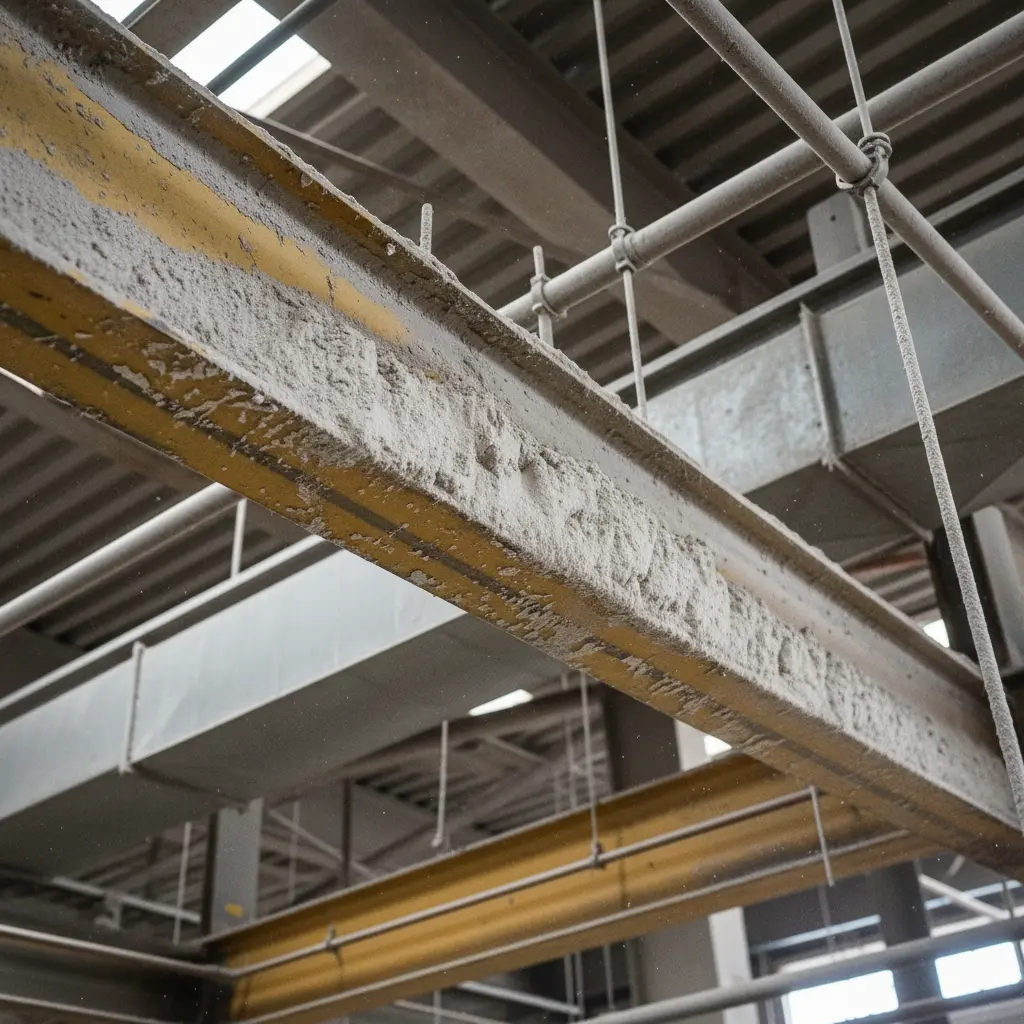
Dust exceeding 1/32" thickness on structural steel - the hazard regular cleaning prevents
The fire marshal walks through your manufacturing floor and runs a finger across an overhead beam. When that dust layer measures 1/32 inch thick (about the thickness of a paperclip), you receive a citation. NFPA standards adopted by OSHA set this threshold because dust layers thicker than this can fuel flash fires or explosions. Regular high dusting prevents accumulation from reaching this dangerous level.
Prevention approach: Regular cleaning using HEPA vacuum systems with extendable poles captures dust without dispersing it into the air. This prevents the dangerous buildup that creates fire and explosion hazards. Proper methods never use compressed air blowing, which would create explosive dust clouds.
▶Learn More: Prevention & Compliance
We see this risk most often in woodworking shops, textile facilities, food processing plants, and metal fabrication spaces. Any operation that generates fine particles requires preventive cleaning. The challenge is that dust settles exactly where routine cleaning never reaches: on ceiling beams, above equipment, in high corners, and on top of electrical conduits.
For facilities with heavy dust generation, we schedule regular cleaning during shutdowns when all ignition sources can be eliminated and we have full access to production areas. Prevention requires monthly high dusting in heavy dust environments. Some facilities need continuous preventive protocols to stay compliant and safe.
Failed Health and Safety Inspections
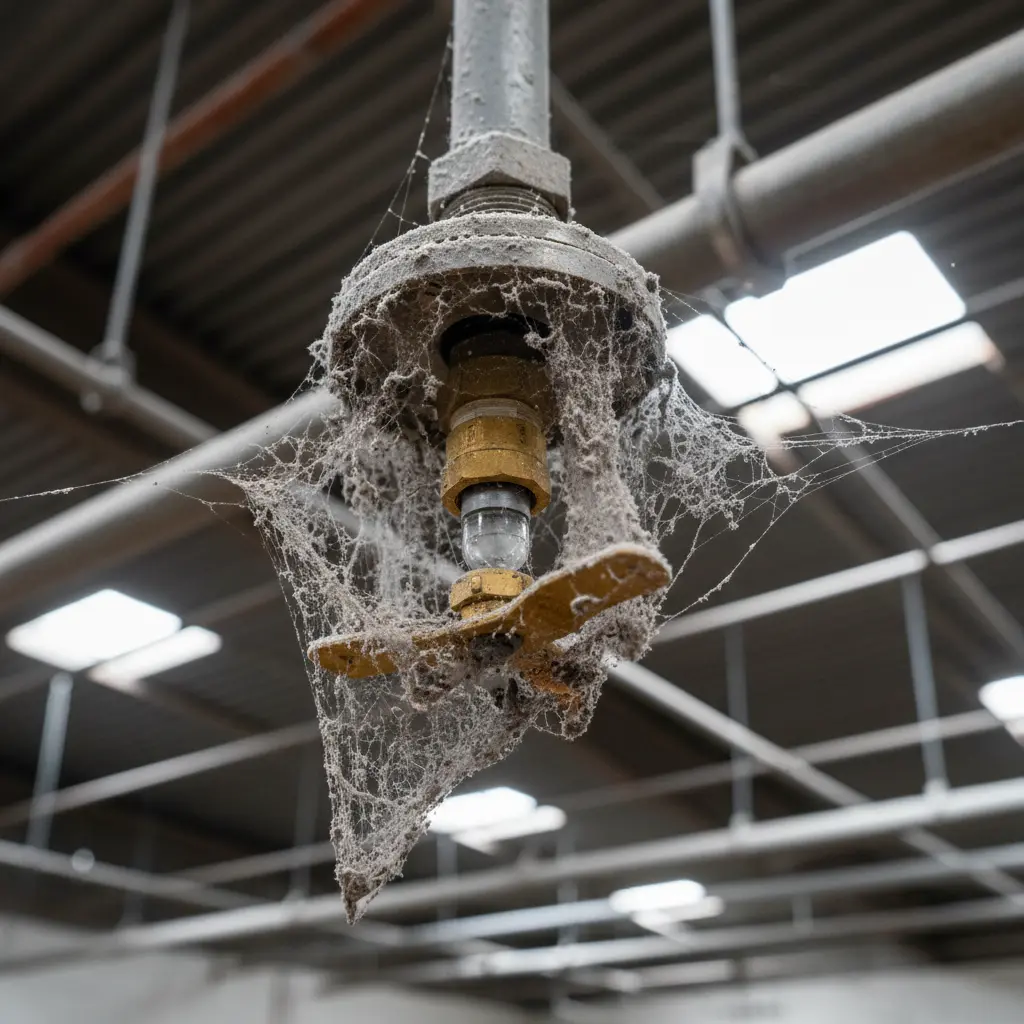
Fire sprinkler head covered in dust and cobwebs - inspection failure requiring immediate correction
A health inspector opens your restaurant kitchen's ceiling access panel and finds dust coating the interior surfaces. Or an OSHA inspector spots thick dust on warehouse sprinkler heads during a walkthrough. Both scenarios result in citations that must be corrected before reinspection.
Solution: We receive calls from facility managers who need documented corrective action within days. The inspection report specifies exactly what failed, and we address those citations directly. Our corrective action includes before and after photos, detailed cleaning logs, and compliance documentation that satisfies reinspection requirements.
▶Learn More: Preventative Scheduling
Most commonly: dusty HVAC vents, overhead pipes with visible accumulation, ceiling tiles with stains or dust buildup, and high ledges where debris has collected.
We learned from working with food service clients that inspectors want to see evidence of ongoing prevention, not just one-time cleanup. So we help establish preventative schedules that keep facilities inspection-ready year-round.
Indoor Air Quality Complaints
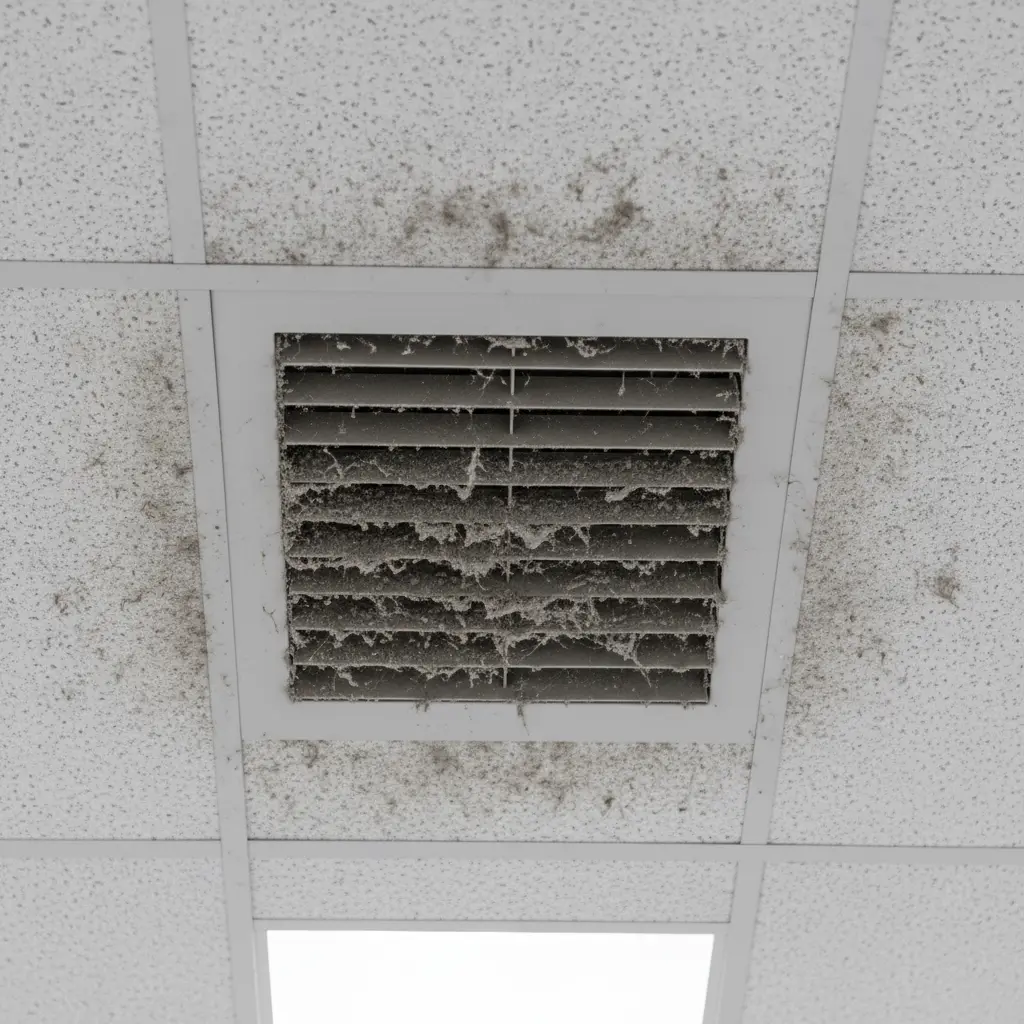
HVAC vent with heavy dust accumulation circulating allergens and causing employee complaints
Employees report headaches, sneezing, and respiratory irritation that seems worse on certain floors or in specific buildings. Facility managers investigate and discover the HVAC system is circulating dust from vents that haven't been cleaned in years.
Solution: The root cause is straightforward: dust accumulates on ceiling vents, inside return air grills, on fan blades, and across ductwork exteriors. Every time the HVAC system runs, it disturbs that dust and distributes particles throughout occupied spaces. We approach this by combining high dusting of all visible HVAC components with recommendations for duct cleaning when interior contamination is severe.
Most facilities see immediate improvement in air quality complaints after the first thorough high dusting. Maintaining quarterly service prevents dust from accumulating to problematic levels again.
Post-Construction and Renovation Dust
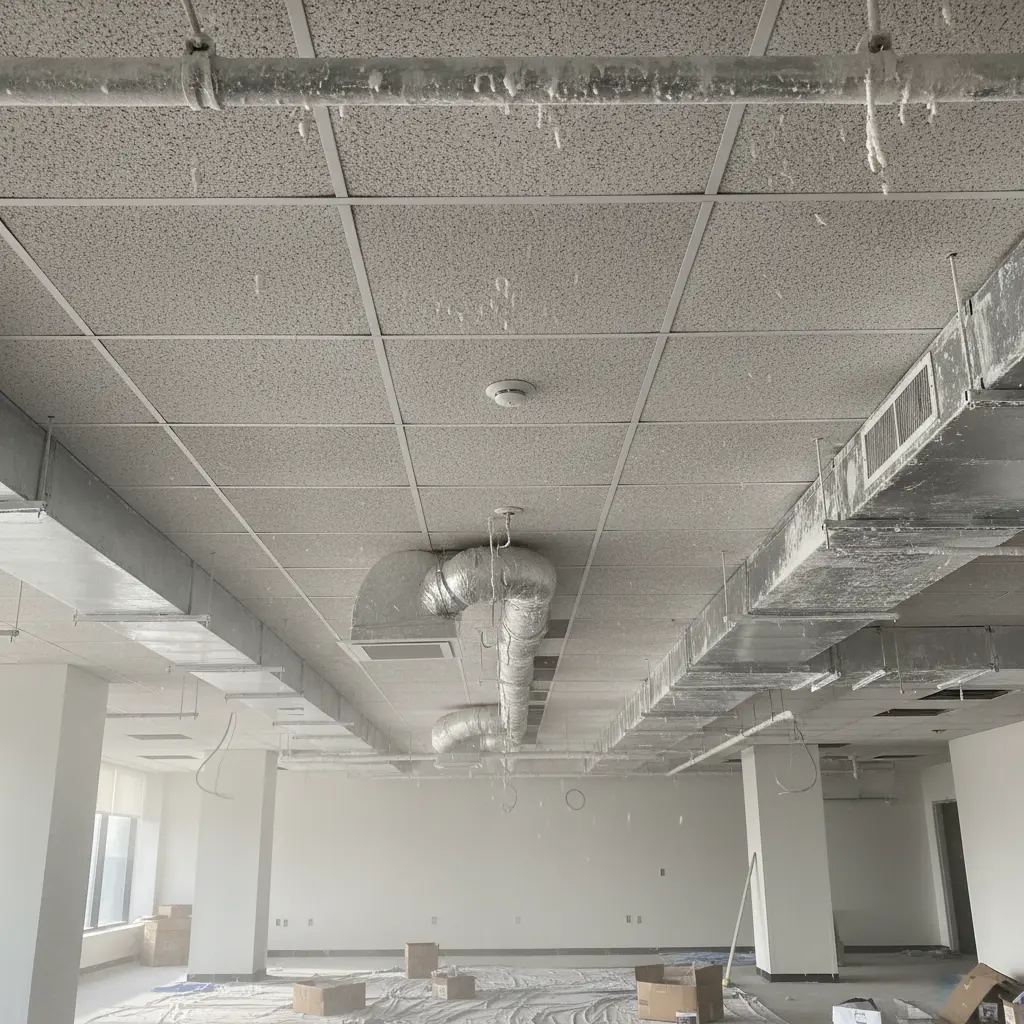
Construction dust contamination on ceiling tiles and infrastructure after renovation work
Construction generates enormous amounts of fine dust that settles everywhere, including places contractors never clean: on top of ceiling tiles, across sprinkler pipes, inside light fixtures, and coating HVAC vents. Weeks after contractors leave, facility managers notice dust continuing to fall onto desks, products, and floors.
Solution: This post-construction dust requires heavy-duty protocols beyond routine high dusting. We start with thorough vacuuming of all overhead surfaces using high-filtration equipment, often making multiple passes because construction dust is so pervasive. Areas near demolition or drywall work need extra attention because fine particulates embed themselves in every crack and surface texture.
We coordinate closely with construction schedules. Some facility managers bring us in mid-project to prevent dust migration into occupied areas. Others wait until substantial completion and schedule high dusting just before occupancy.
Grease and Grime in Food Service Facilities
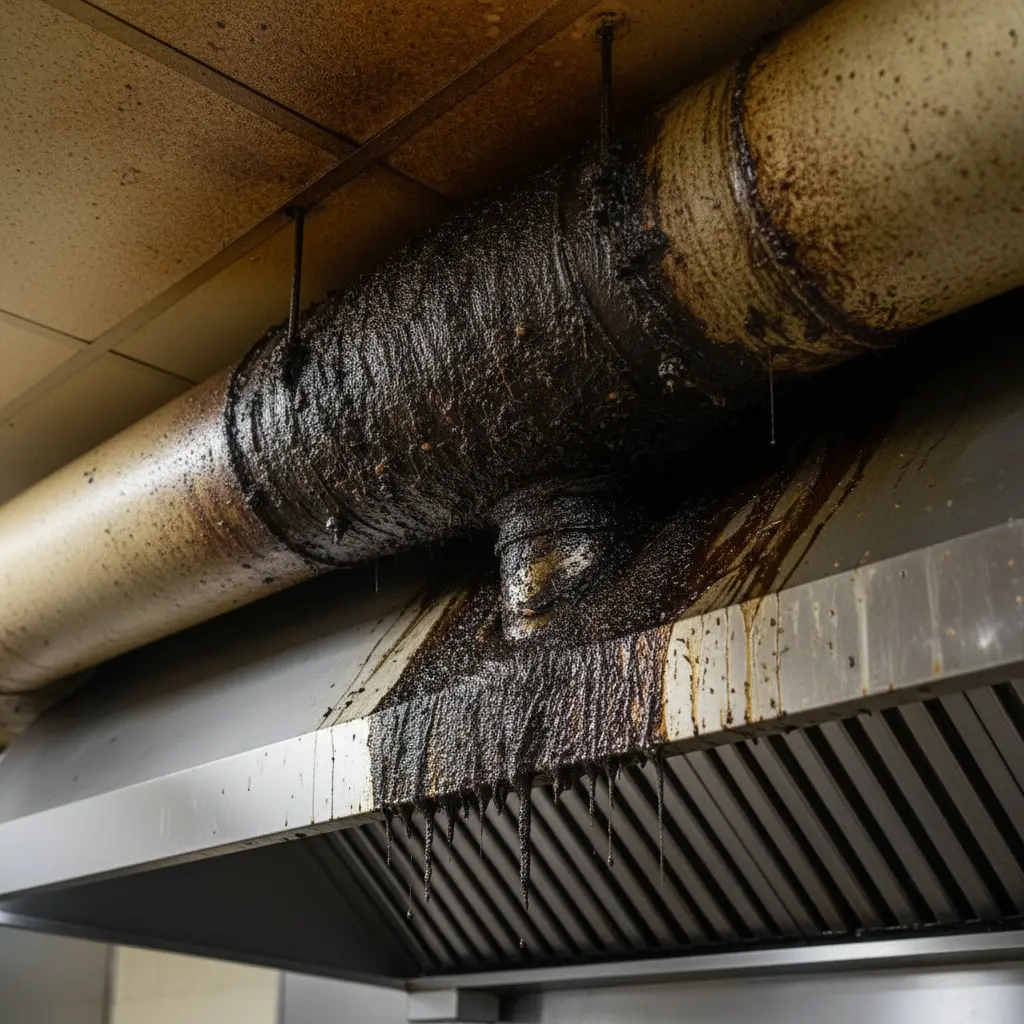
Grease-coated dust buildup on kitchen exhaust hood - health inspection violation and fire hazard
Restaurant kitchens face a specific high dusting challenge: airborne grease combines with dust to create sticky accumulations on ceiling surfaces, hood exteriors, pipes, and vents. Standard dusting tools can't remove this buildup because grease makes everything adhere stubbornly.
Solution: Our approach uses degreasing solutions appropriate for food service environments, combined with aggressive wiping and vacuuming. Some surfaces need multiple cleaning passes to fully remove years of buildup. We protect food prep areas during cleaning and ensure all cleaning agents are food-safe and properly rinsed.
Health inspectors flag these conditions immediately. Grease-coated dust overhead can drip into food preparation areas, attracting pests and creating contamination risks. Prevention requires monthly high dusting in commercial kitchens with heavy cooking volume.
Equipment Malfunction from Dust Accumulation
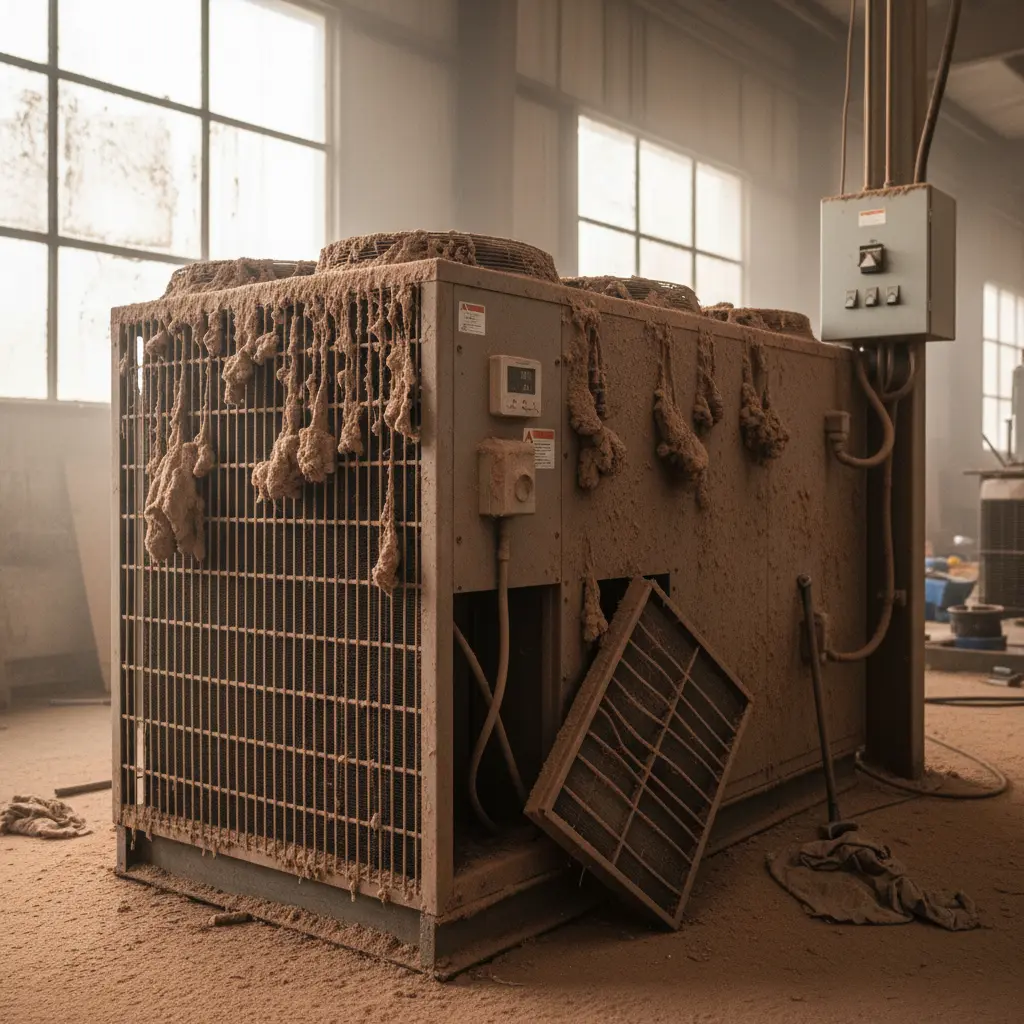
Dust accumulation causing HVAC equipment overheating and sensor malfunctions
Production managers call when manufacturing equipment starts overheating or sensors begin providing false readings. Maintenance teams investigate and discover dust coating electronics, clogging ventilation fans, or insulating components that need to dissipate heat.
Solution: We solve this by establishing preventative high dusting schedules that clean overhead areas before dust reaches equipment-damaging levels. For manufacturing facilities, this means cleaning ceiling areas, cable trays, overhead conveyors, and the tops of production equipment on monthly or quarterly cycles.
Facility managers tell us that establishing regular high dusting prevents the majority of dust-related equipment problems. The cost of quarterly cleaning is minimal compared to emergency repairs or replacing motors and electronics damaged by dust accumulation.
Frequently Asked Questions About High Dusting
Isn't regular janitorial cleaning enough?
▼
Routine cleaning focuses on floors and surfaces within arm's reach. It rarely addresses ceilings, ductwork, beams, or high fixtures where dust accumulates continuously. Even daily cleaning leaves these areas untouched, allowing dust to build up and eventually rain down onto freshly cleaned surfaces. High dusting targets what regular cleaning misses, creating a truly clean environment from top to bottom.
Can our in-house team handle high dusting?
▼
For low-level areas (tops of cabinets, door frames under 12 feet), trained staff with extension poles can manage it safely. Above 12 feet, working near electrical equipment, or dealing with combustible dust requires specialized equipment and training. Professional crews bring OSHA-compliant lifts, HEPA vacuums, proper insurance, and fall protection systems. The question is less about capability and more about risk management.
Will high dusting disrupt our operations?
▼
Most high dusting happens after hours or during slow periods to minimize disruption. We section off work areas, use quiet equipment when possible, and work systematically through zones. For 24/7 operations like hospitals or manufacturing plants, we coordinate phased cleaning that works around critical functions. The HVAC may need temporary shutdown to prevent spreading dust, but proper planning keeps operational impact minimal.
How can I tell if our facility needs high dusting?
▼
Shine a flashlight upward at vents, ceiling corners, or beam tops. Visible dust or cobwebs mean it's overdue. Other signs: dust falling on surfaces shortly after cleaning, gray residue when you touch overhead pipes, or allergy complaints from staff despite clean floors. If it's been over a year since these areas were addressed, assume buildup exists whether you see it or not.
We have very high ceilings (30+ feet). Is that even cleanable?
▼
Yes. Telescoping vacuum poles extend 30-40 feet, allowing ground-based cleaning for many high areas. For complex spaces or extreme heights, we use scissor lifts, boom lifts, or scaffolding with proper fall protection. We've cleaned airplane hangars, warehouses with 50-foot ceilings, and cathedral rafters. The equipment and approach scale to the height—no ceiling is too high to clean properly.
What's the difference between high dusting and duct cleaning?
▼
High dusting cleans visible surfaces: vent registers, grilles, duct exteriors, and surrounding ceiling areas. Duct cleaning is a separate service that uses specialized equipment to vacuum and brush inside the ductwork itself. Both improve air quality, but they're different tasks. If dust coats your vent covers, high dusting addresses that immediately. Interior duct cleaning typically happens every few years when needed.
How much does commercial high dusting cost?
▼
Pricing depends on ceiling height, square footage, accessibility, and soil level. A 10,000 sq ft office with 12-foot ceilings costs less than a 50,000 sq ft warehouse with 30-foot ceilings and heavy machinery creating access challenges. Most facilities pay between $0.15-0.50 per square foot for standard high dusting. Combustible dust environments or post-construction cleaning cost more due to specialized protocols and equipment requirements.
Can you clean while we're open and operating?
▼
Often, yes. We work around your schedule, cleaning sections at a time without blocking entire areas. Retail stores, restaurants, and offices commonly have us work during business hours in coordination with your team. However, some situations work better after hours: spaces where lift equipment would block aisles, facilities where dust disturbance affects sensitive processes, or environments where noise matters (like libraries or medical offices).
How does regular cleaning prevent combustible dust hazards?
▼
Preventing combustible dust accumulation requires specific protocols, not avoidance of cleaning. We use HEPA vacuum systems (never compressed air or sweeping, which create explosive clouds), work in controlled sections, and eliminate ignition sources during cleaning. The danger comes from allowing dust to accumulate beyond safe levels, not from proper cleaning. OSHA and NFPA standards require keeping dust layers under 1/32 inch thick. Regular cleaning following these protocols keeps dust below hazardous thresholds and reduces risk.
Do you provide documentation for compliance and audits?
▼
Yes. We provide before and after photos, cleaning logs with dates and areas serviced, and compliance reports that reference relevant standards (OSHA housekeeping, NFPA combustible dust prevention, Joint Commission for healthcare). Many facilities need this documentation for safety audits, health inspections, or insurance requirements. We build the reporting into the service because we know facility managers need proof the work happened and met standards.
How long does high dusting last?
▼
Depends entirely on your dust generation rate. Office buildings might stay clean for 3-6 months. Industrial facilities with heavy dust production may need monthly service. Warehouses with forklift traffic typically need cleaning every 3-4 months. The cleaning itself is durable—dust doesn't magically reappear. But new dust accumulates based on your operations, location, and HVAC filtration. Regular scheduling prevents returning to square one.
What's the best time of year for high dusting?
▼
Spring works well to clear winter buildup before opening season. Fall prepares for closed-window months. Schools schedule during summer or winter breaks. Manufacturers align it with maintenance shutdowns. Retail often does it before major seasonal displays. The honest answer: the best time is whenever it fits your schedule and before dust becomes visible from the ground. Regular intervals matter more than specific seasons.
Does high dusting improve HVAC efficiency?
▼
Yes, but indirectly. Cleaning dust from vents, return grilles, and surrounding ceiling areas removes obstructions that force systems to work harder. We're not servicing the HVAC system itself—that's a different trade. But removing the dust coating on registers improves airflow, and preventing dust from being drawn into returns reduces filter loading. Many facility managers notice better air circulation and slightly lower energy costs after thorough high dusting.
What happens to the dust you remove?
▼
We capture it in HEPA-filtered vacuum systems that trap particles down to 0.3 microns, preventing redistribution into the air. Collected dust is bagged and disposed of according to its type. Standard dust goes to regular waste. Dust from industrial facilities where combustion is a concern, along with hazardous materials or regulated waste, follows specific disposal protocols. We also vacuum and wipe ground-level surfaces after high dusting to remove any particles that fell during the process.
High Dusting Services Across Arizona
We provide commercial high dusting services throughout Arizona's major markets. Our OSHA-compliant teams serve warehouses, manufacturing facilities, hotels, hospitals, and commercial properties with specialized equipment and safety protocols.
Phoenix Metro
Serving industrial facilities, corporate offices, and commercial properties throughout the Valley with certified lift operators and HEPA filtration systems.
Tucson Area
Professional high dusting for commercial and industrial facilities throughout Tucson, with specialized expertise in combustible dust compliance.
Can't find your city? We serve additional Arizona communities. Contact us to check service availability in your area.
Ready to Address Your Facility's High Dusting Needs?
Dust accumulation overhead isn't just an appearance issue—it affects air quality, compliance standing, fire safety, and equipment performance. The facilities that schedule regular high dusting avoid the emergency calls we receive from managers facing failed inspections or air quality complaints.
What We Provide
We serve commercial facilities across Arizona with the specialized equipment, OSHA-compliant protocols, and industry-specific experience this work requires. Our team uses HEPA vacuum systems and certified lift operators to reach surfaces up to 40 feet high, and we provide the compliance documentation facility managers need for audits.
Serving Phoenix, Scottsdale, Tucson, Mesa, and surrounding Arizona communities
Licensed • Insured • 10+ Years Experience